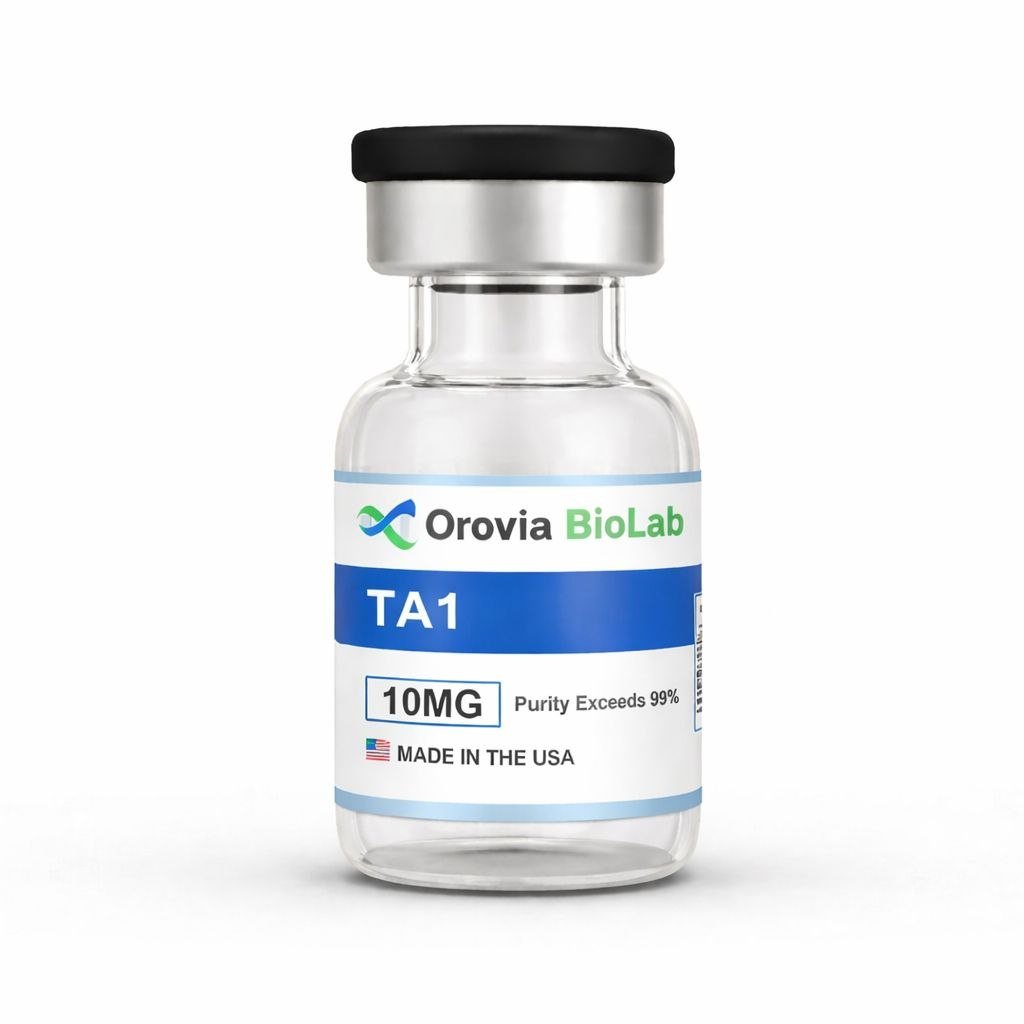
Thymosin Alpha 1 (Tα1), also known as Zadaxin or Thymalfasin, is a naturally occurring 28-amino acid peptide hormone produced by the thymus gland. It plays a key role in modulating the immune system, particularly by enhancing T-cell function and promoting immune balance. Synthetic versions are used therapeutically.
Key Biological Functions
- Immune Modulation: Stimulates differentiation and maturation of T-cells (including CD4+ helper T-cells, CD8+ cytotoxic T-cells, and natural killer cells). It boosts cytokine production (e.g., IL-2, IFN-γ) without causing excessive inflammation.
- Antiviral Effects: Enhances antiviral immunity by improving dendritic cell function and antigen presentation.
- Anti-Cancer Potential: Supports anti-tumor immunity by activating immune cells against cancer.
- Evidence: Derived from thymosin fraction 5 (isolated in the 1960s by Allan Goldstein). Human studies show it restores thymic function in immunocompromised states (e.g., HIV, chemotherapy).
Medical Uses and Approvals
| Condition |
Status |
Key Evidence |
| Chronic Hepatitis B & C |
Approved in over 35 countries (e.g., China, Italy, Russia as Zadaxin). |
Meta-analyses (e.g., World J Gastroenterol 2012) show improved response rates with IFN-α combo therapy; HBsAg clearance in 20-30% of cases. |
| COVID-19 |
Investigational; used in trials (e.g., China 2020). |
Phase III trials (Front Immunol 2021) reported reduced mortality (OR 0.30) and faster viral clearance in severe cases. |
| Cancer (e.g., Melanoma, Lung) |
Adjunctive therapy. |
Improves survival in combo with chemo/immunotherapy (J Immunother 2019); enhances PD-1 inhibitor efficacy. |
| Immunodeficiencies** (HIV, Sepsis) |
Off-label/research. |
Restores CD4 counts; Phase II trials show sepsis survival benefit (Crit Care Med 2014). |
| Vaccines |
Adjuvant. |
Boosts antibody responses (e.g., flu vaccine trials). |
Dosage: Typically 1.6 mg subcutaneous injection, 2x/week for 6 months (varies by indication). Half-life ~2 hours.
Mechanism of Action
Tα1 binds Toll-like receptors (TLR-2/9) on antigen-presenting cells, upregulating MHC class I/II and costimulatory molecules. It doesn’t directly kill pathogens but amplifies adaptive immunity.
Molecular Structure:
Ac-Ser-Asp-Ala-Ala-Val-Asp-Thr-Ser-Ser-Glu-Ile-Thr-Thr-Lys-Asp-Leu-Lys-Glu-Lys-Lys-Glu-Val-Glu-Glu-Asp-OH
(SEQ ID: 28 aa, MW ~3108 Da)
Side Effects and Safety
- Common: Mild injection-site reactions (redness, pain).
- Rare: Fatigue, nausea (<5% incidence).
- Contraindications: Hypersensitivity; caution in autoimmunity (theoretical risk of overactivation).
- Safety Data: Well-tolerated in 20+ years of use; no genotoxicity or teratogenicity in preclinical studies (FDA IND status).
Availability and Legality
- Prescription: Not FDA-approved in the US (available via compounding pharmacies or research peptides).
- Research: Widely studied (PubMed: 1,500+ papers). Ongoing trials for Lyme disease, TB, and post-viral fatigue.
- Peptide Therapy Context: Popular in functional medicine for “immune reboot” (e.g., 5-10 mg/week cycles), often stacked with BPC-157 or TB-500.
Recent Research Highlights
- Long COVID: Italian trial (Infectious Disease Reports 2023) showed symptom resolution in 80% vs. 40% placebo.
- Cancer Immunotherapy: Synergy with checkpoint inhibitors (Cancer Immunol Res 2022).
- Aging: Restores thymic output in elderly (Aging Cell 2020).
For sourcing or personal use, consult a physician—it’s not a DIY supplement. Sources: ClinicalTrials.gov, PubMed, SciDirect. If you have a specific question (e.g., dosing protocols, studies), let me know!
 Express & Discreet Shippin
 Express & Discreet Shippin




Reviews
Clear filtersThere are no reviews yet.