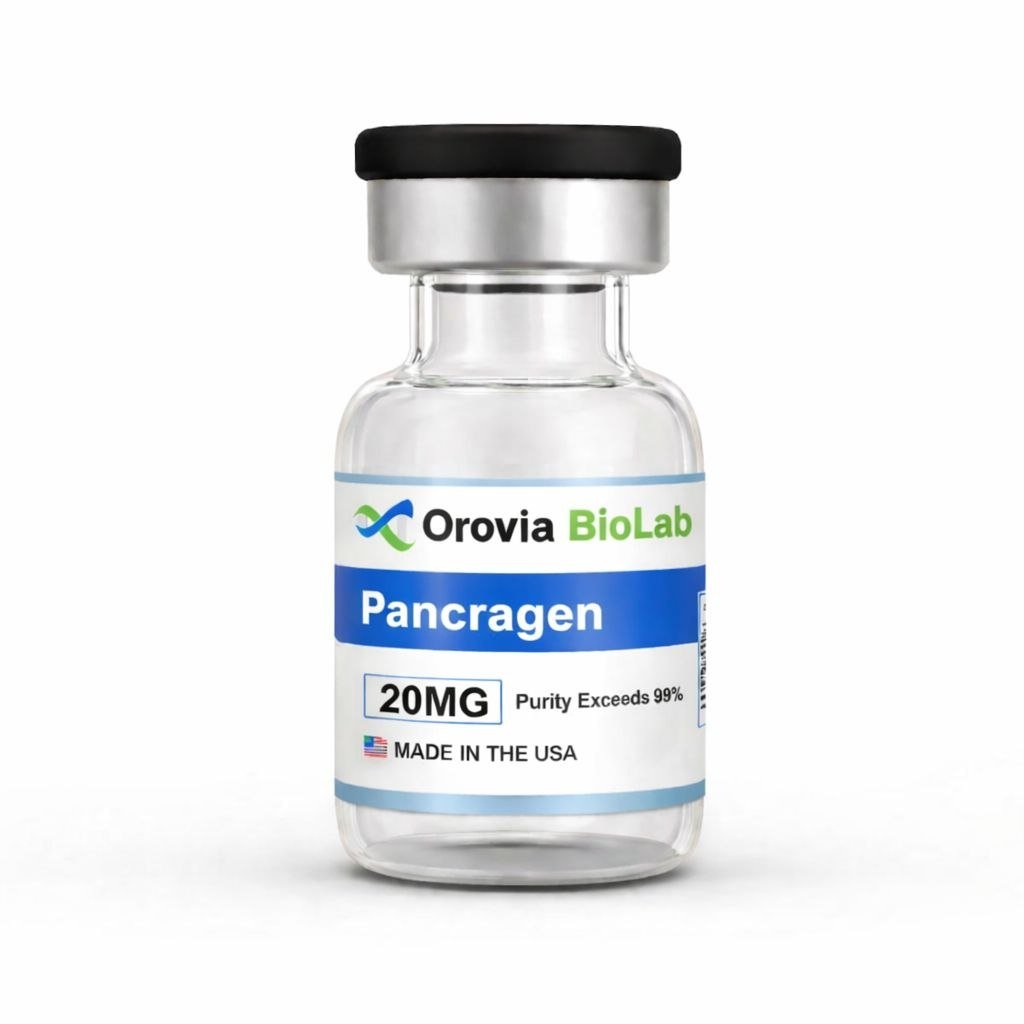
Pancragen is a synthetic tetrapeptide (Lys-Glu-Asp-Trp, or KEDW) classified as a bioregulator peptide. It was developed in Russia as part of the research by scientists like Vladimir Khavinson at the St. Petersburg Institute of Bioregulation and Gerontology. These peptides are designed to target specific organs or tissues, influencing gene expression, cellular repair, and function without acting as hormones. Pancragen is primarily associated with pancreatic regulation, particularly supporting beta-cell function and insulin production.
Purported Benefits and Mechanism
Pancragen is claimed to:
- Normalize pancreatic function: Enhances insulin synthesis and secretion, potentially aiding in glycemic control.
- Support endocrine balance: May improve glucose metabolism and protect against oxidative stress in pancreatic cells.
- Anti-aging effects: Like other Khavinson peptides (e.g., Epitalon, Thymalin), it’s suggested to promote tissue regeneration and longevity by modulating DNA expression in pancreatic cells.
- Potential applications: Studied for diabetes (type 1 and 2), pancreatitis, metabolic syndrome, and age-related pancreatic decline.
Mechanism: It reportedly penetrates pancreatic cells, binds to DNA chromatin, and activates genes involved in protein synthesis for insulin and other pancreatic enzymes. Short peptide chains (3-4 amino acids) allow tissue-specific targeting.
Evidence:
- Russian studies: Preclinical and small human trials (e.g., Khavinson et al., 2000s) show improved insulin levels and beta-cell mass in diabetic models. A 2014 study in Bulletin of Experimental Biology and Medicine reported normalized glycemia in rats.
- Limited Western validation: No large-scale FDA-approved RCTs. Most data from Russian literature; anecdotal reports from nootropic/peptide communities (e.g., Reddit’s r/Peptides).
- Safety profile: Appears well-tolerated in studies (doses 10-200 mcg/day), with no major side effects reported. Not a drug; sold as a research chemical.
| Aspect |
Details |
| Molecular Formula |
C<sub>23</sub>H<sub>37</sub>N<sub>7</sub>O<sub>8</sub> |
| Molecular Weight |
551.59 g/mol |
| Typical Dosage |
100-200 mcg/day subcutaneously or intramuscularly, cycled 10-20 days |
| Half-Life |
Short (~30 min), hence daily dosing |
| Availability |
Research peptides from vendors like Peptide Sciences, CosmicNootropic; not for human consumption (gray market) |
Usage and Considerations
- Administration: Usually reconstituted lyophilized powder with bacteriostatic water for injection. Oral/sublingual forms exist but less bioavailable.
- Stacking: Often combined with other bioregulators like Suprefort (pancreas extract) or Vladonix (immune).
- Legality: Not approved by FDA/EMA; legal for research in most places, but human use is unregulated and at your own risk.
- Caveats: Consult a doctor before use, especially with diabetes meds (risk of hypoglycemia). Purity varies by source—third-party testing recommended (e.g., HPLC reports).
For deeper dives, check PubMed for “Pancragen” or Khavinson’s reviews in Advances in Gerontology. If you’re sourcing it, prioritize vendors with COAs. What’s your specific interest—research, personal use, or something else?
 Express & Discreet Shippin




Reviews
Clear filtersThere are no reviews yet.