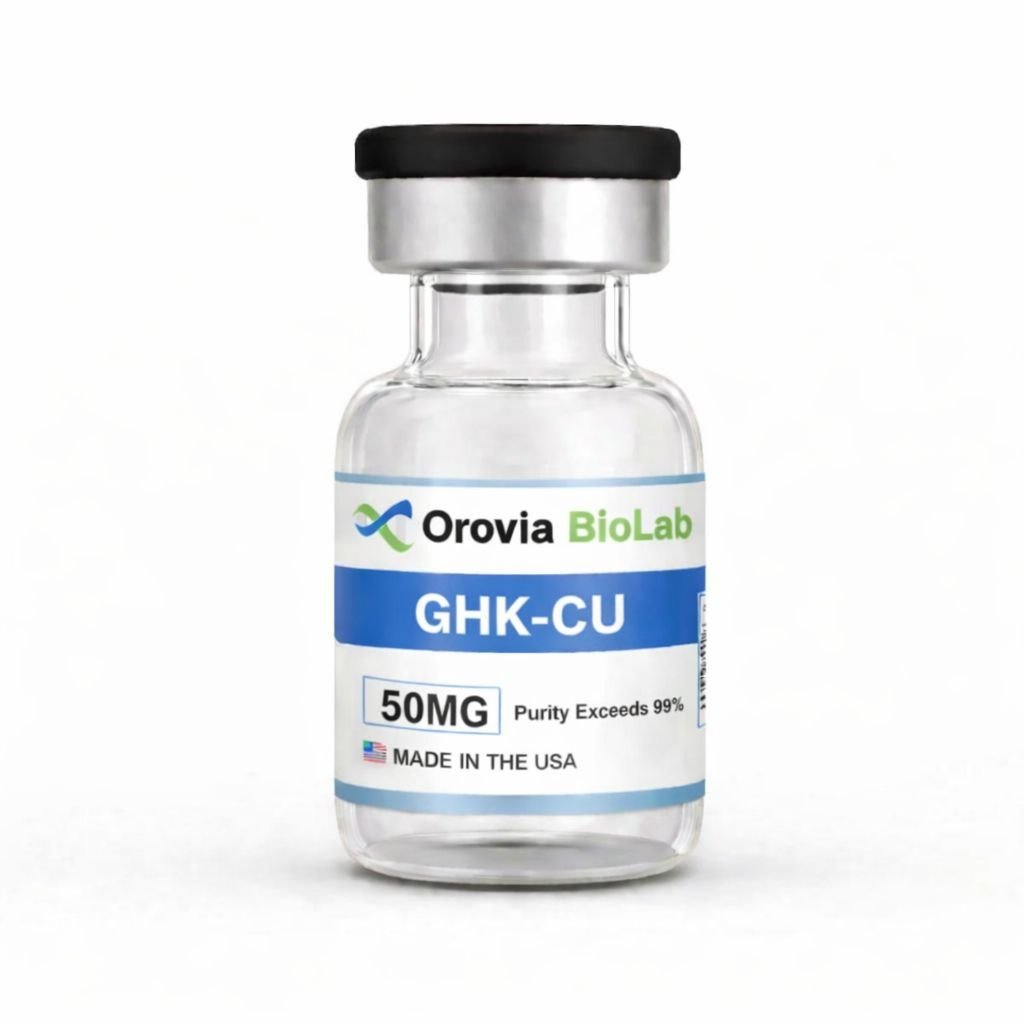
GHK-Cu, or Glycyl-L-Histidyl-L-Lysine Copper, is a naturally occurring tripeptide complexed with copper ions (Cu²⁺). It’s found in human plasma, saliva, and urine, with levels declining with age (from ~200 ng/mL at age 20 to ~80 ng/mL by age 60). Discovered in 1973 by Dr. Loren Pickart, it’s widely used in cosmetics and researched for regenerative and anti-aging effects.
Chemical Structure
Sequence: Gly-His-Lys (GHK) bound to Cu²⁺.
Molecular formula: C₁₄H₂₄N₆O₄Cu.
Key feature: The copper ion enhances bioavailability and bioactivity, allowing GHK-Cu to act as a signaling molecule.
Key Benefits and Research Evidence
GHK-Cu is popular in skincare (e.g., serums, creams) and has emerging therapeutic applications. Here’s a breakdown supported by studies:
Benefit
Mechanism
Evidence
Wound Healing & Skin Repair
Stimulates collagen, elastin, and glycosaminoglycan production; promotes angiogenesis (new blood vessels); reduces inflammation.
Rat studies (1988, Pickart): Accelerated healing of ischemic wounds by 40-60%.<br>- Human trials (2015, Pickart review): Improved diabetic ulcers and post-surgical scars.
Anti-Aging (Wrinkle Reduction)
Upregulates 4,000+ genes for tissue remodeling; downregulates inflammatory genes.
Clinical trial (2012, Leyden et al.): 12-week topical use reduced wrinkles by 31-55% vs. placebo (n=71 women).<br>- In vitro: Boosts fibroblast activity, mimicking youthful gene expression (2014, Pickart).
Neuroprotection, DNA repair, cancer metastasis inhibition (preclinical).
Alzheimer’s models (2010): Reduced tau protein aggregation.<br>- Metastasis studies (2012): Blocked invasive genes in lung cancer cells.
Sources: Peer-reviewed papers in Journal of Investigative Dermatology, BioMed Research International, and Pickart’s reviews (e.g., 2015 in Oxidative Medicine). PubMed has 100+ studies; search “GHK-Cu” for latest.
Usage and Products
Topical: 0.1-1% concentrations in serums (e.g., The Ordinary “Buffet + Copper Peptides,” NIOD Copper Amino Isolate). Apply 1-2x daily; blue color fades on skin.
Injectable: Used in research/clinics (e.g., 1-2 mg subcutaneous doses for hair/wounds). Not FDA-approved for most uses—consult a doctor.
DIY/Supplements: Available as powder (e.g., 100 mg vials). Reconstitute with bacteriostatic water; typical dose 1-5 mg/day subQ or topical.
Stability: pH-sensitive (best 5-7); store cool/dark. Avoid mixing with strong acids/vitamin C (can displace Cu).
Safety and Side Effects
Generally Safe: Low toxicity (LD50 >2g/kg in rats). Topical use rarely causes irritation.
Risks:
Excess copper: Nausea, headaches (rare at cosmetic doses).
Allergic reactions: Histamine release possible.
Pregnancy/Breastfeeding: Avoid due to lack of data.
Interactions: May enhance antibiotics; monitor copper levels if using long-term.
Regulation: Cosmetic-grade OK; pharma-grade for injections. Not a drug—results vary.
Comparison to Similar Peptides
Peptide
Key Difference
Best For
GHK-Cu
Copper-bound; broad regenerative.
Skin/hair repair.
GHK (no Cu)
Less potent; needs Cu for full effect.
Basic remodeling.
Matrixyl (Pal-KTTKS)
Collagen-focused, no metal.
Wrinkles only.
Argireline
Botox-like, neuromuscular.
Expression lines.
For best results, combine with sunscreen/moisturizers. Research is promising but ongoing—human trials are limited for non-cosmetic uses. If you’re using it therapeutically, get bloodwork for copper/zinc balance. Sources: Pickart’s site (copperpeptides.com), clinicaltrials.gov.
.
Additional information
Quantity
50mg, 100mg
Delivery Details
2-3 days from the time of purchase to all locations
Order now and enjoy great discounts! We deliver top-quality peptide products straight to you. Fast, reliable, and discreet service. Delivery hours: 10 AM–8 PM daily. Don’t miss out
 Express & Discreet Shippin
 Express & Discreet Shippin





Reviews
Clear filtersThere are no reviews yet.