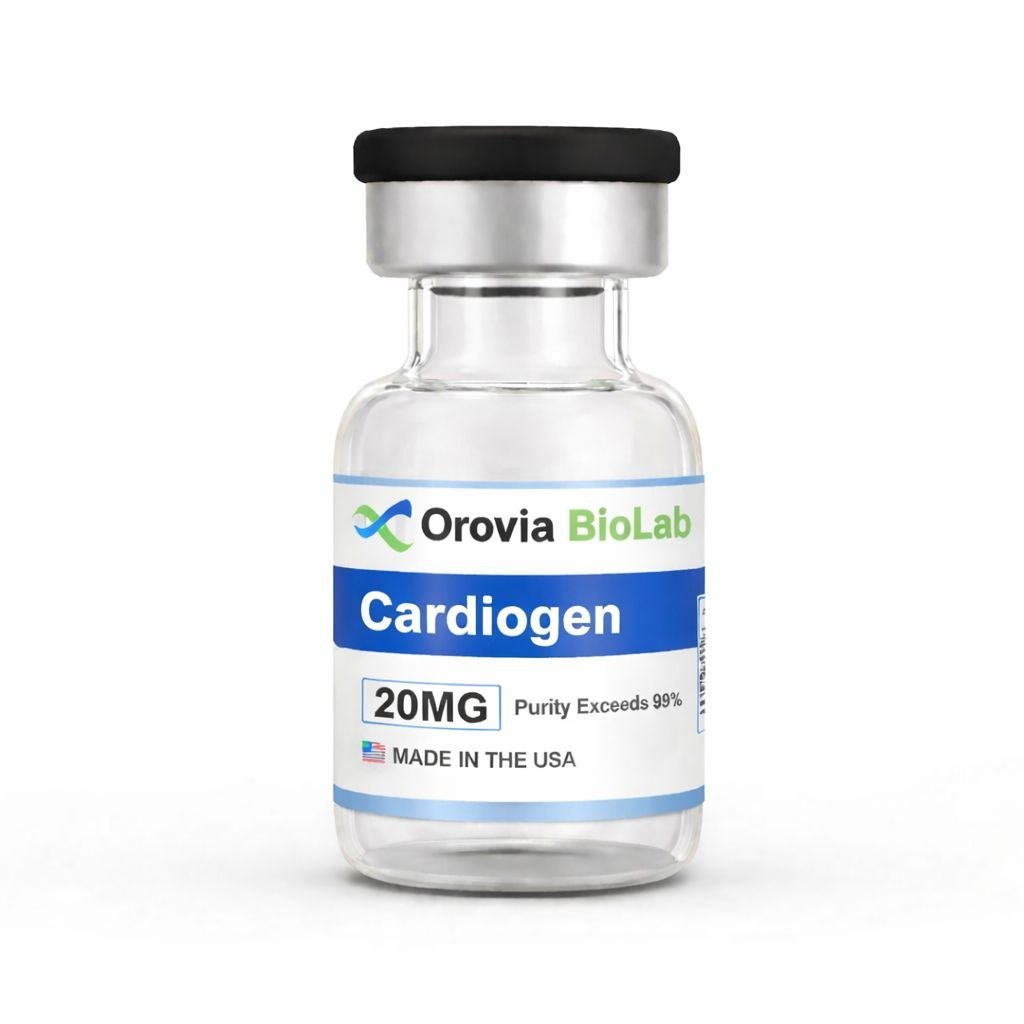
Cardiogen (also known as CGP or H-Tyr-Ala-Glu-Asp-Gly-Pro-Arg-OH) is a synthetic tetrapeptide bioregulator developed primarily for research into cardiovascular health. It belongs to a class of short-chain peptides derived from research by Russian scientists (e.g., Vladimir Khavinson’s group), often categorized as “cytomedins” or tissue-specific bioregulators. These peptides are designed to mimic natural regulatory signals in the body, targeting specific organs like the heart.
Key Facts:
- Molecular Formula: C₃₃H₅₁N₉O₁₂
- Molecular Weight: ~789.8 g/mol
- Structure: A linear tetrapeptide sequence (Ala-Glu-Asp-Arg), sometimes listed with additional residues in variants.
- Origin: Extracted or synthesized based on peptides from calf heart tissue; not a naturally occurring hormone but a lab-engineered analog.
Purported Mechanism of Action
Cardiogen is researched for its potential to:
- Regulate gene expression in cardiomyocytes (heart muscle cells) by influencing transcription factors, promoting repair and normalization of heart tissue.
- Activate telomerase and support telomere length, which may aid cellular rejuvenation.
- Reduce fibrosis and inflammation in cardiac tissue, potentially improving contractility and vascular function.
- Modulate apoptosis (programmed cell death) in damaged heart cells.
Evidence Base (from available studies):
- Preclinical Studies: Russian research (e.g., Khavinson et al., 2000s–2010s) in animal models (rats, rabbits) showed Cardiogen normalized ECG readings, reduced myocardial infarction damage, and improved heart function post-ischemia. For example, a 2011 study in Bulletin of Experimental Biology and Medicine reported 20–30% reduction in infarct size.
- Human Data: Limited to anecdotal reports and small-scale trials in Russia. No large-scale FDA/EMA-approved RCTs. A 2014 review in Advances in Gerontology suggested benefits for age-related cardiac decline.
- PubMed/Research Citations: Search terms like “Cardiogen peptide” yield ~20 papers, mostly from Russian journals (e.g., PMID: 21449447). Western validation is sparse.
| Study Type |
Key Findings |
Limitations |
| Animal (Rat MI model) |
↓ Infarct size by 25%, ↑ ejection fraction |
Small n=20–50, no long-term follow-up |
| In Vitro (Cardiomyocytes) |
↑ Proliferation by 15–20%, ↓ Oxidative stress |
Not human cells |
| Human (Observational, n=50 elderly) |
Improved ECG in 60% |
No placebo control, self-reported |
Potential Uses (Research Contexts)
- Cardiovascular Repair: Post-MI recovery, heart failure, arrhythmias.
- Anti-Aging: Heart tissue rejuvenation.
- Hypertension/Atherosclerosis: Vascular normalization.
- Often stacked with other peptides like Ventfort (vessels) or Chelohart (heart).
Dosage in Research Protocols (not medical advice):
- Typical: 100–200 mcg/day subcutaneously or intramuscularly for 10–20 days, cycled 2–3x/year.
- Purity: Lab-sourced at >98% via HPLC.
Availability and Legality
- Sold As: Research chemical (not for human consumption) from peptide vendors (e.g., CosmicNootropic, Peptide Sciences). Prices: $30–60 for 10–20mg vial.
- Status:
| Region |
Legal Status |
| USA |
Research-only; not FDA-approved drug/supplement. Schedule not controlled. |
| EU |
Similar; novel food restrictions may apply. |
| Russia |
Registered as dietary supplement (e.g., “Cardiogen” by Imedis). |
- Risks/Warnings: Potential side effects include injection-site reactions, unknown long-term safety, contamination in unregulated sources. Contraindicated in pregnancy, cancer (telomerase activation concern). Always third-party test purity (e.g., Janoshik).
Comparison to Similar Peptides
| Peptide |
Target |
Key Difference |
| Cardiogen |
Heart muscle |
Shortest chain, telomerase focus |
| Chelohart |
Heart extract |
Broader extract, less specific |
| Ventfort |
Blood vessels |
Vascular vs. myocardial |
| Epitalon |
General anti-aging |
Pineal gland, systemic telomeres |
Bottom Line: Cardiogen shows promise in niche research for heart repair but lacks robust clinical evidence. Consult a physician before any use; it’s experimental. For deeper dives, check primary sources like Khavinson’s reviews on PubMed or ResearchGate. If you have a specific question (e.g., sourcing, protocols), let me know!
 Express & Discreet Shippin
 Express & Discreet Shippin




Reviews
Clear filtersThere are no reviews yet.