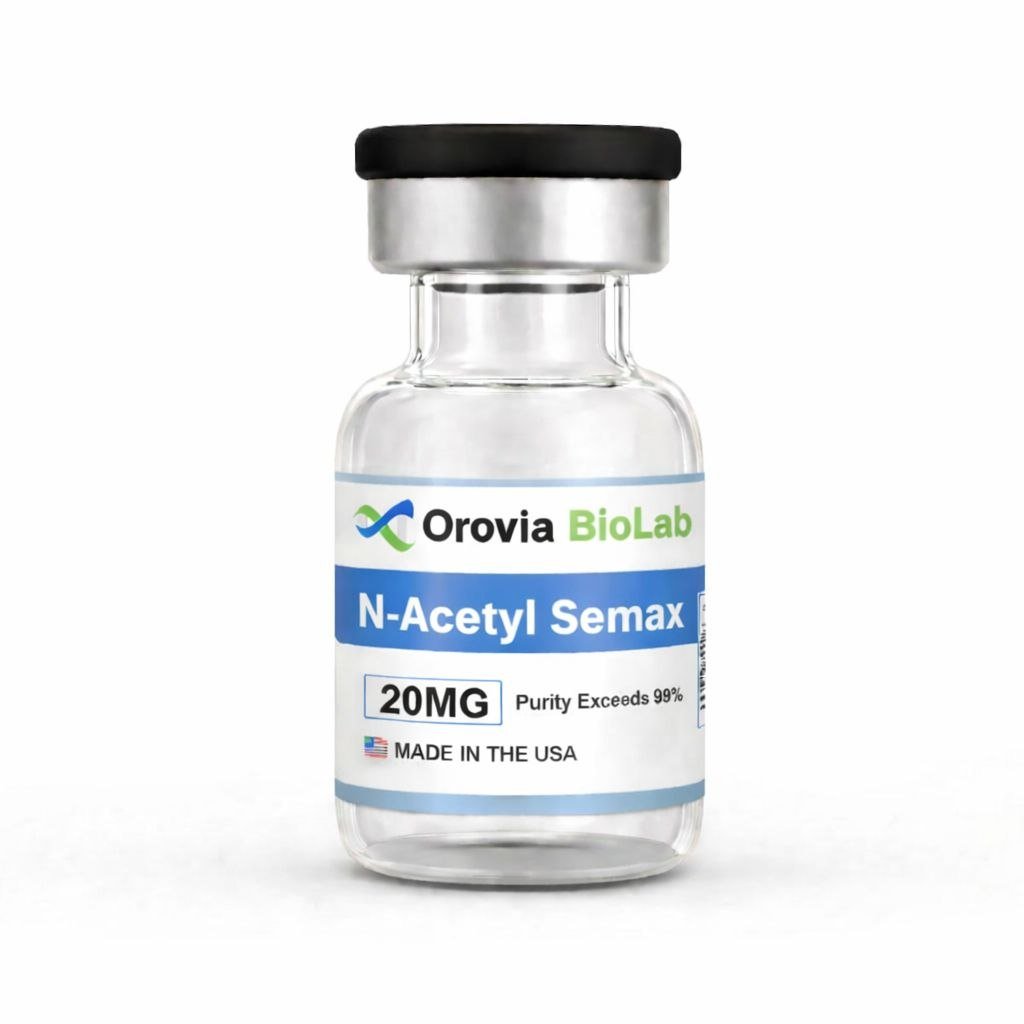
N-Acetyl Semax Amidate (also known as N-Acetyl Semax acetate or NASAm) is a synthetic peptide analog of Semax, a nootropic drug originally developed in Russia. It’s a modified version designed for enhanced bioavailability and stability, primarily used in research and nootropic communities for cognitive enhancement. Semax itself is a heptapeptide (sequence: Met-Glu-His-Phe-Pro-Gly-Pro) derived from adrenocorticotropic hormone (ACTH), and the N-Acetyl Amidate form adds an acetyl group to the N-terminus and an amidated C-terminus, improving its ability to cross the blood-brain barrier and resist enzymatic breakdown.
Key Differences from Standard Semax
| Form |
Modifications |
Reported Advantages |
| Semax |
None (standard acetate salt) |
Baseline nootropic effects |
| N-Acetyl Semax |
N-terminal acetylation |
Better stability, longer half-life |
| Semax Amidate |
C-terminal amidation |
Improved BBB penetration |
| N-Acetyl Semax Amidate |
Both acetylation + amidation |
Optimal potency, duration (up to 4-6x longer effects) |
Purported Benefits and Mechanisms
NASAm is popular in biohacking for its neuroprotective and cognitive-boosting properties. Evidence is largely anecdotal or from Russian studies on Semax (e.g., for stroke recovery, ADHD), with limited Western clinical trials. Here’s a breakdown:
| Effect |
Mechanism |
Evidence Level |
| Memory & Learning |
Upregulates BDNF (brain-derived neurotrophic factor) and NGF; enhances synaptic plasticity |
Animal studies; user reports |
| Focus & Attention |
Modulates dopamine/serotonin; increases enkephalin levels |
Russian clinical trials on Semax |
| Neuroprotection |
Antioxidant effects; reduces inflammation post-injury |
Stroke recovery studies (Semax) |
- Other Potential Uses:
- Anxiety/stress reduction (via HPA axis modulation).
- Improved mood and motivation.
- Possible benefits for optic nerve damage or glaucoma (from Semax ophthalmology research).
Dosage (Common Research/Community Guidelines):
- Intranasal: 100-600 mcg/day (split doses), cycles of 10-14 days on/10 off.
- Subcutaneous: 50-300 mcg/day.
- Note: These are not FDA-approved; start low to assess tolerance.
Evidence and Research
- Russian Studies: Semax approved for cognitive disorders, stroke, and glaucoma. A 2018 review in Neuroscience and Behavioral Physiology highlighted BDNF increases in rats.
- Animal Data: N-Acetyl modifications show 2-5x potency in memory tasks (e.g., passive avoidance tests).
- Human Anecdotes: Forums like Reddit (r/Nootropics) report sharper focus within 15-30 min, lasting 4-8 hours.
- Limitations: No large RCTs for NASAm specifically. Side effects rare (mild irritation, headaches), but long-term safety unknown.
Legality and Availability
- US/EU: Research chemical only—not FDA-approved for human use. Sold online (e.g., peptides vendors) as “not for human consumption.”
- Russia: Semax is prescription; analogs unregulated.
- Risks: Purity varies; contamination possible. Consult a doctor before use.
For synthesis or sourcing, it’s typically produced via solid-phase peptide synthesis. If you’re researching protocols, PubChem (CID for Semax: 3081522) or Russian patents (e.g., RU2149438) provide structural details.
If you have a specific question (e.g., stacking, vendors, or studies), let me know!
 Express & Discreet Shippin




Reviews
Clear filtersThere are no reviews yet.