Discovery and Structure
- Isolation: Identified by Swiss researchers (Schneider-Helmert et al.) in hypothalamic extracts of rabbits under deep sleep (delta wave stage).
- Sequence: H-Trp-Ala-Gly-Gly-Asp-Ala-Ser-Gly-Glu-OH (9 amino acids, MW ~848 Da).
- Sources: Endogenous in the hypothalamus, pineal gland, and pituitary; also synthetic analogs studied.
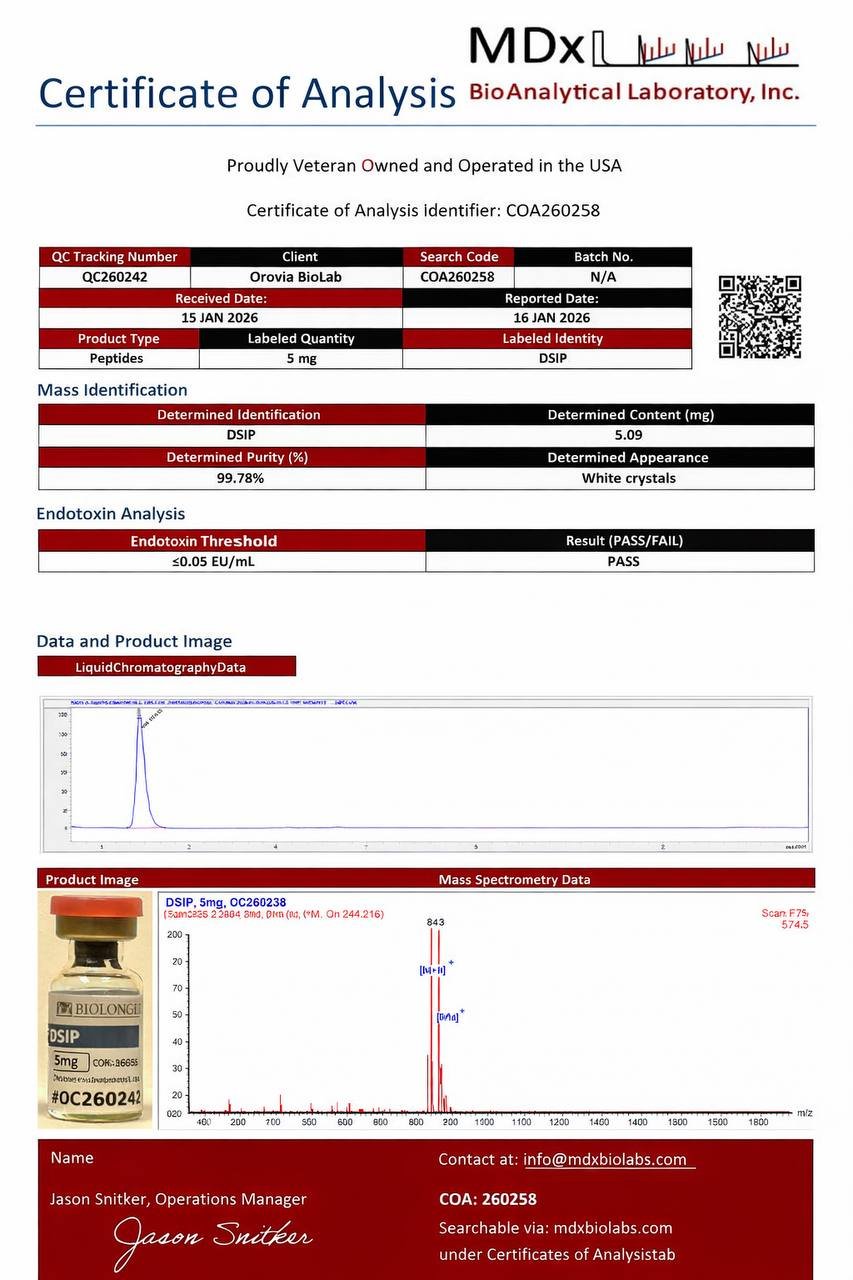
Evidence: Original paper in Experientia (1977); confirmed via mass spectrometry in later studies (e.g., Peptides, 1988).
Proposed Mechanisms of Action
DSIP does not act via a single receptor but influences multiple systems:
- Sleep Promotion: Enhances slow-wave sleep (SWS, delta waves) without suppressing REM. Reduces sleep latency and increases total sleep time in animal models.
- Stress Reduction: Normalizes ACTH, cortisol, and somatostatin levels; acts as an antioxidant and free radical scavenger.
- Neuroendocrine Effects: Modulates GH/IGF-1 axis, inhibits somatostatin, stimulates LH/FSH.
- Other: Potential GABAergic modulation, mitochondrial stabilization, and anti-cancer properties (in vitro tumor growth inhibition).
Evidence:
| Mechanism |
Key Studies |
Findings |
| Sleep Induction |
Anastasi et al. (1981, Eur J Pharmacol) |
IV DSIP (25 nmol/kg) increased delta sleep in rabbits by 30-50%. |
| Stress/Anti-Epileptic |
Yehuda et al. (1980, Neurosci Lett) |
Reduced cortisol in stressed rabbits; anticonvulsant in pentylenetetrazol models. |
| Neuroprotection |
Bjartmar et al. (2000, Brain Res) |
Protected against ischemic damage in rat hippocampus. |
| Antioxidant |
Kovalzon & Mukhametov (2008 review) |
Scavenges ROS, stabilizes membranes. |
Clinical Research
Human trials are limited (mostly 1970s-1990s, small N=10-50), with mixed but promising results:
- Insomnia: 7.5 mg nasal spray improved sleep efficiency in chronic insomniacs (Graf & Kastin, 1984, Peptides). Subjective reports: faster sleep onset, fewer awakenings.
- Depression/Anxiety: Reduced symptoms in major depression (Krüger et al., 1983, Int J Clin Pharmacol Ther Toxicol); normalized EEG in neurotics.
- Chronic Pain: Adjuvant in neuropathic pain, reducing opioid needs (Berti et al., 1989).
- Other: Improved alcohol withdrawal (Schneider-Helmert, 1981); potential in withdrawal syndromes.
Limitations:
- No large RCTs; many open-label or crossover designs.
- Inconsistent dosing (IV 25-100 nmol/kg; nasal 0.1-1 mg).
- Short half-life (~15 min), poor oral bioavailability → focus on intranasal/sublingual.
Recent Meta-Analyses: A 2014 review (Front Biosci) notes "insufficient evidence for routine use" but calls for modern trials. 2022 preclinical data (Int J Mol Sci) supports role in circadian rhythm disorders.
Current Status and Availability
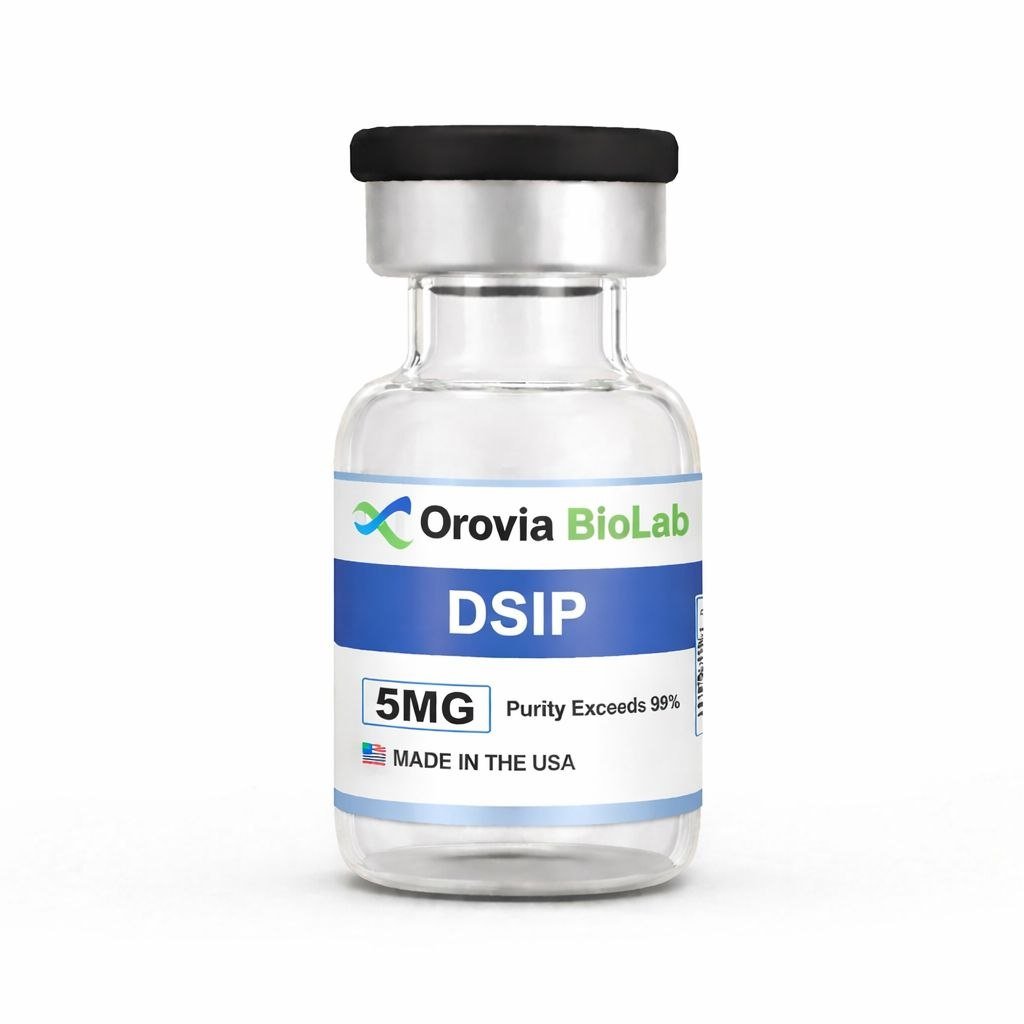
- Regulatory: Not FDA/EMA-approved as a drug. Sold as a research chemical or nootropic (e.g., 1-10 mg vials online).
- Ongoing Research: Focus on analogs for Alzheimer's (tau pathology reduction, J Alzheimers Dis 2019), PTSD, and longevity (mimics caloric restriction effects).
- Safety Profile: Low toxicity in animal studies (LD50 >1 g/kg); mild side effects (headache, injection site reactions). No abuse potential noted.
Key References
- Schneider-Helmert et al. (1977). Experientia - Discovery.
- Frieboes et al. (1995). Eur Arch Psychiatry Clin Neurosci - Human sleep study.
- Kovalzon (2016). Neurosci Behav Physiol - Comprehensive review.
- PubMed search: "DSIP sleep" yields ~300 papers; latest (2023) on synthetic DSIP in zebrafish models.
For primary sources, search PubMed or Google Scholar with "Delta Sleep-Inducing Peptide." If synthesizing or experimenting, consult lab protocols (e.g., HPLC purification >98% purity recommended). Research remains niche—promising but understudied. Let me know if you need specifics on protocols, analogs, or vendors!
 Express & Discreet Shippin
 Express & Discreet Shippin




Reviews
Clear filtersThere are no reviews yet.