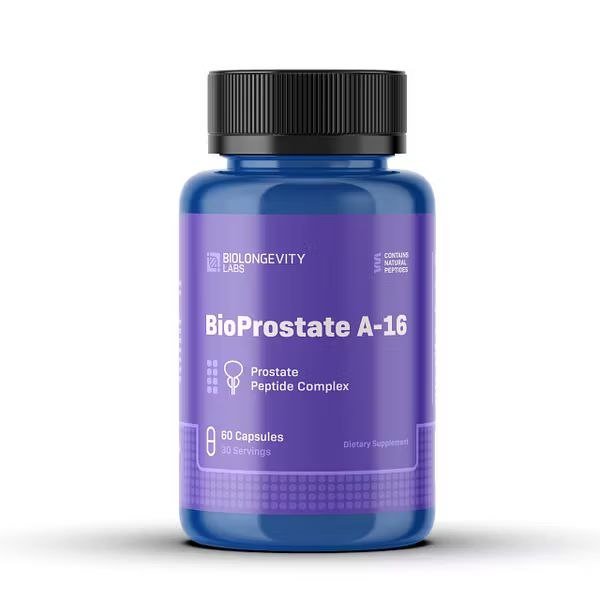
Prostate peptide bioregulator are short peptides or peptide complexes derived from (or modeled on) prostate tissue. They are studied and used primarily for supporting prostate function, reducing inflammation, and addressing age-related or inflammatory prostate issues. The two main categories are bovine prostate tissue extracts (such as Prostatilen, Vitaprost, Samprost, or Prostatex) and synthetic short peptides such as Prostamax (Lys-Glu-Asp-Pro / KEDP), developed within the Khavinson bioregulator framework.
What Is a Prostate Peptide Bioregulator?
- Tissue extracts (Prostatilen and related products): Complexes of natural bioactive low-molecular-weight peptides obtained from bovine prostate glands via enzymatic hydrolysis or extraction. Available in some countries as registered pharmaceuticals (suppositories, injections, or tablets).
- Synthetic bioregulators (Prostamax / KEDP): A defined tetrapeptide (Lys-Glu-Asp-Pro) designed as a tissue-specific bioregulator for the prostate. It is part of the broader family of short peptides researched for chromatin modulation and organ support.
These are distinct from hormonal therapies, alpha-blockers, or herbal extracts (e.g., saw palmetto). They are positioned as bioregulatory agents rather than conventional drugs in many research contexts.
How Prostate Peptide Bioregulators Are Proposed to Work
Proposed mechanisms (drawn mainly from preclinical and Russian clinical observations) include:
- Organotropic (tissue-specific) action on the prostate.
- Anti-inflammatory and immunotropic effects that may reduce edema and inflammatory markers.
- Improvement of microcirculation and rheological properties of blood in prostatic tissue.
- Support for regenerative and reparative processes.
- Modulation of chromatin structure and gene expression (particularly noted for short synthetic peptides like Prostamax in studies on aging cells).
- Potential myotropic effects and influence on urinary flow parameters.
The bioregulation theory holds that these peptides help restore more youthful patterns of cellular activity in the target organ. This framework has not been widely validated in Western biomedical research.
Potential Benefits Supported by Available Research
Research (primarily open-label, small-cohort, or non-placebo-controlled studies from Russia and CIS countries) has examined use in:
- Chronic abacterial prostatitis / chronic pelvic pain syndrome (CP/CPPS) — Reports of reduced pain, dysuria, and improved quality-of-life scores (e.g., NIH-CPSI questionnaire improvements). Some studies note benefits when combined with alpha-blockers.
- Benign prostatic hyperplasia (BPH) / lower urinary tract symptoms (LUTS) — Improvements in International Prostate Symptom Score (IPSS), maximum urinary flow rate (Qmax), residual urine volume, and overall symptom severity in certain trials.
- Microcirculation and erectile function — Some data show better penile arteriolar blood flow parameters and improvements in erectile function scores (IIEF-5) in men with concurrent chronic prostatitis and erectile dysfunction.
- Post-inflammatory or post-surgical support and general prostate tissue maintenance in aging men.
- Preclinical observations of reduced prostate swelling, inflammatory cell infiltration, and pathological remodeling in animal models.
Evidence strength is generally rated low to moderate by independent reviewers due to study design limitations, small sample sizes, lack of independent Western replication, and predominance of regional research sources. Results should be interpreted cautiously.
Scientific Evidence Overview
- Prostatilen and related extracts have decades of clinical use in Russia, with reviews summarizing 30+ years of application and multiple studies showing symptom improvement in chronic prostatitis and BPH.
- Synthetic Prostamax has more limited published data, focused on chromatin effects in aging cells and some organotypic or animal prostate models. Clinical claims for prostate outcomes are often extrapolated from the parent tissue-extract literature.
- Safety profiles in available studies are generally favorable, with good tolerability reported.
Always cross-reference primary literature and consult a physician. These compounds are not FDA-approved for prostate treatment in the United States and are often sold for research or as supplements in other markets.
Safety, Side Effects, and Precautions
Reported tolerability is generally good in available studies. Mild local effects (e.g., with suppositories) or transient symptoms have occasionally been noted. Serious adverse events appear uncommon in the published literature.
Important cautions:
- Not a treatment or preventive for prostate cancer. Any man with elevated PSA, suspected malignancy, or history of prostate cancer requires thorough evaluation by a urologist.
- Consult a healthcare provider before use, especially if you have existing prostate conditions, are taking other medications, or have cardiovascular or bleeding concerns.
- Product quality varies widely among research and supplement sources. Third-party testing for purity, identity, and contaminants is essential.
- These are not substitutes for proven medical therapies (alpha-blockers, 5-alpha-reductase inhibitors, antibiotics when indicated, lifestyle measures, or surgical options when needed).
Who Might Consider Discussing Prostate Peptide Bioregulators?
Men interested in complementary approaches for:
- Persistent mild-to-moderate lower urinary tract symptoms.
- History of chronic prostatitis or pelvic discomfort after conventional evaluation.
- Age-related prostate support as part of a broader health strategy (alongside diet, exercise, weight management, and regular screening).
They are not first-line therapy and should never replace diagnostic workup or evidence-based care.
Frequently Asked Questions
Is Prostate Peptide Bioregulator the same as Prostatilen or Prostamax? Prostatilen and similar products are tissue extracts. Prostamax typically refers to the synthetic tetrapeptide KEDP. Both fall under the broader category of prostate peptide bioregulators.
Can it replace conventional BPH or prostatitis treatment? No. It is sometimes studied as an adjunct. Standard care remains primary.
Are there long-term safety data? Decades of use exist for the registered extract products in certain countries, but comprehensive long-term Western safety data are limited.
Where can reliable information be found? Peer-reviewed reviews on prostatic peptides (e.g., studies on Prostatilen) and critical analyses of bioregulator research provide the most balanced starting points.
 Express & Discreet Shippin









Reviews
Clear filtersThere are no reviews yet.