Retina Bioregulators
Retina bioregulators are specialized short-peptide complexes designed to support the function and resilience of retinal tissue. Rooted in decades of research from the St. Petersburg Institute of Bioregulation and Gerontology, these tissue-specific peptides (often based on or inspired by preparations like Retinalamin) aim to help normalize retinal activity, particularly in the face of age-related changes, metabolic stress, and degenerative processes.
This guide covers what they are, how they work, potential benefits, supporting research, usage considerations, and key FAQs—optimized for those searching for natural or complementary approaches to retinal and vision support.
What Are Retina Bioregulators?
Retina bioregulators are short chains of amino acids (typically di-, tri-, or tetrapeptides) that act as biological messengers. They are either extracted from animal retinal tissue (e.g., bovine sources in classic preparations) or synthesized as cytogens—precise amino-acid sequences modeled after natural peptide complexes.
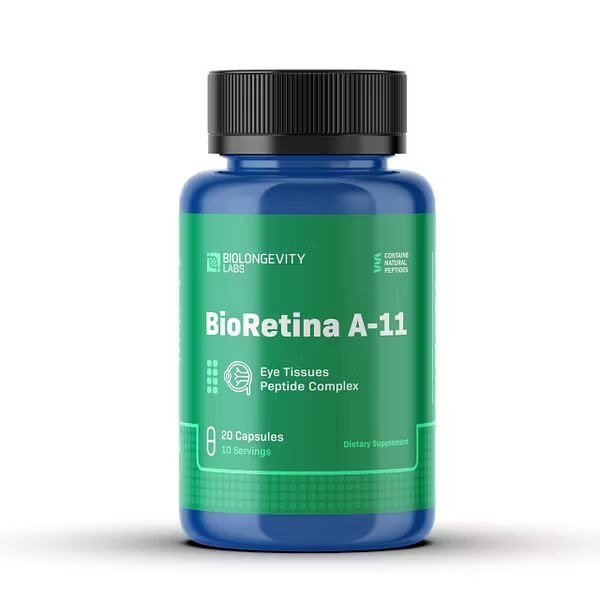
Unlike general antioxidants or carotenoids (such as lutein and zeaxanthin), these peptides are tissue-specific. They primarily target retinal cells, including photoreceptors (rods and cones) and the retinal pigment epithelium. Commercial examples include Nature’s Marvels™ Retina Bioregulator and similar Retina Peptide Complex products, commonly available in capsule form (e.g., 10 mg doses).
They form part of a broader class of peptide bioregulators developed for organ-specific support and are frequently combined with vascular or neural peptides for enhanced results.
How Do Retina Bioregulators Work?
Research indicates that these short peptides influence gene expression and protein synthesis in a tissue-selective manner. They interact with promoter regions of genes involved in retinal cell differentiation and function, helping to:
- Support the synthesis of markers associated with photoreceptor and pigment epithelium health.
- Promote cellular resilience and regenerative potential within the retina.
- Influence local metabolic and circulatory processes that deliver nutrients and oxygen to retinal tissues.
- Exert neuroprotective effects, including mitigation of certain toxic stresses in experimental models.
In essence, they aim to help restore or maintain physiological activity rather than simply masking symptoms. Effects are described as epigenetic regulation of differentiation proteins in retinal neurons and pigment epithelium.
Potential Benefits of Retina Bioregulators
Clinical observations and studies (primarily from Russian research centers spanning 30+ years) report the following potential outcomes when used regularly, often as part of a complex approach:
- Slowing progression of degenerative retinal processes.
- Improvements in visual acuity in a significant portion of patients.
- Expansion of visual field boundaries.
- Better fundus appearance and functional activity of the retina (supported by electrophysiological testing in some reports).
- Support for low-light vision and overall visual performance.
- Prolonged preservation of remaining visual function (reported in some cases of retinitis pigmentosa for 10–15 years with consistent use).
Reported improvement rates in visual functions reach 80–95% in treated cohorts with various retinal pathologies, with no worsening observed in the studied groups. Benefits appear strongest when combined with peptides targeting blood vessels and neural tissue.
Conditions Commonly Discussed in Research
Retina bioregulators have been studied or applied in contexts involving:
- Age-related macular degeneration (dry and wet forms).
- Diabetic retinopathy.
- Retinitis pigmentosa (pigmentary retinal dystrophy).
- Complicated myopia.
- Other degenerative or metabolic retinal challenges linked to hypertension, diabetes, or lifestyle factors (smoking, excessive alcohol, prolonged screen exposure).
They are positioned as supportive or complementary tools rather than standalone cures. Modern lifestyle stressors (blue light, digital screens, aging) make preventive or maintenance use a frequent discussion point among users seeking natural retinal support.
Scientific Background and Research Highlights
Pioneering work by researchers including V.Kh. Khavinson and S.V. Trofimova has produced extensive experimental and clinical data. Key findings include:
- Retinalamin (the classic peptide complex from cattle retina) and related short peptides (e.g., Ala-Glu-Asp-Gly / Epitalon analogs, Lys-Glu) demonstrate retinoprotective activity.
- In clinical settings, regular peptide use slowed pathological progression and improved visual metrics in the majority of patients with macular degeneration, diabetic retinopathy, and retinitis pigmentosa.
- Mechanisms involve regulation of differentiation markers (e.g., Pax6, Brn3, Vsx1, TTR) and improved interaction between photoreceptors and pigment epithelium.
- Experimental models show reduced dystrophy foci, decreased edema, and protection against certain toxic insults.
These peptides are noted for high tolerability, with reports of no significant side effects or allergic reactions in long-term observations. Retinalamin itself has been included in Russian clinical standards for certain retinal pathologies.
Note: Much of the published clinical data originates from specialized institutes. Independent large-scale Western trials remain limited, so results should be interpreted cautiously and discussed with a qualified healthcare professional.
Typical Usage and Dosage Guidelines
Product instructions (e.g., for Nature’s Marvels™ formulations) commonly recommend:
- Initial course: 2 capsules daily for 10 days.
- Maintenance: Repeat 10-day courses of 2 capsules daily every 3 months.
Capsules are usually taken with water. Combining with vascular (e.g., vessel-targeted) and brain/neural peptides is frequently suggested for broader ocular support. Always follow the specific product label and consult a physician, especially if you have existing eye conditions, take medications, or are pregnant/nursing.
Safety Profile and Considerations
Available reports describe retina bioregulators as generally well-tolerated with no significant cytotoxicity or side effects at studied doses. Individual sensitivity to ingredients remains possible, as with any supplement.
These products are typically sold as dietary supplements or bioregulators, not prescription drugs in most jurisdictions. They are not intended to diagnose, treat, cure, or prevent any disease. Seek professional medical advice for any vision concerns—early intervention with conventional ophthalmology remains essential for conditions like AMD or diabetic retinopathy.
 Express & Discreet Shippin
 Express & Discreet Shippin




Reviews
Clear filtersThere are no reviews yet.