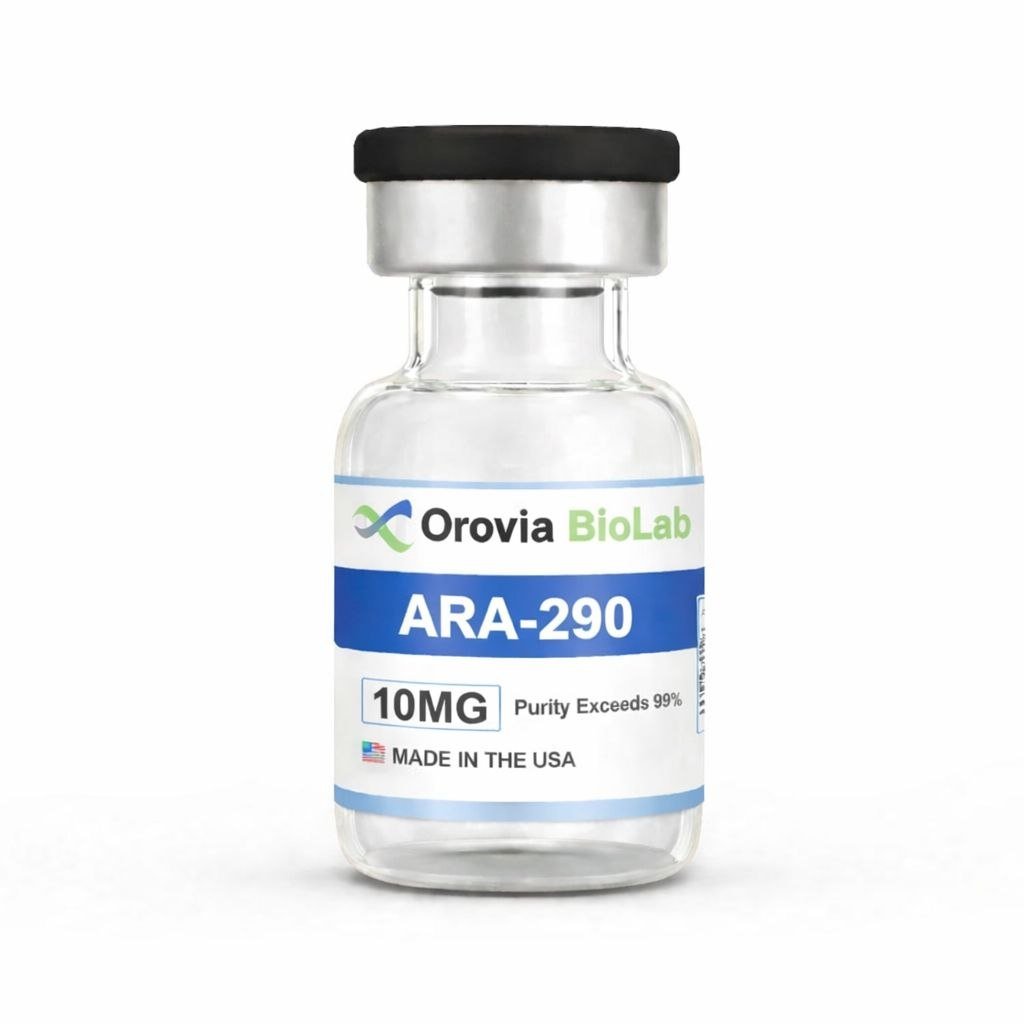
ARA-290 (also known as Cibinetide) is a synthetic, non-hematopoietic peptide analog of erythropoietin (EPO). It’s an 11-amino-acid sequence derived from the EPO receptor’s binding domain, specifically designed to activate the innate repair receptor (IRR), a heteromer of the EPO receptor and β-common receptor. Unlike full EPO, it doesn’t stimulate red blood cell production, avoiding risks like thrombosis.
Key Facts:
- Molecular Formula: C118H211N37O40S2 (approximate for the active sequence).
- Molecular Weight: ~2,500 Da.
- CAS Number: 1055250-52-2.
- Half-Life: ~20-30 minutes in plasma, but effects can last days due to tissue repair mechanisms.
Mechanism of Action
ARA-290 selectively binds to IRR on tissue macrophages and neurons, promoting:
- Anti-inflammatory effects by reducing pro-inflammatory cytokines (e.g., TNF-α, IL-6).
- Neuroprotection and tissue repair via activation of anti-apoptotic pathways (e.g., PI3K/Akt, MAPK/ERK).
- Improved nerve conduction and pain modulation through normalization of sodium channels (e.g., Nav1.7, Nav1.8).
Evidence:
- Preclinical studies (e.g., rat models of diabetic neuropathy) show it restores epidermal nerve fiber density and improves sensory function (Brines et al., PNAS 2014).
- IRR activation is tissue-protective without hematopoietic effects, confirmed in knockout mouse models (Mol Med 2015).
Potential Uses and Research
ARA-290 is investigational and not FDA-approved for any indication. It’s primarily studied for:
| Condition |
Key Findings |
Phase/Status |
| Small Fiber Neuropathy (SFN) |
Phase II trials (NCT01411235) showed improved pain scores, corneal nerve density, and quality of life in sarcoidosis-associated SFN patients (Pain 2014). |
Completed; promising but no Phase III. |
| Diabetic Neuropathy |
Restored C-fiber function and reduced hyperalgesia in animal models (Diabetes 2013). |
Preclinical/early human data. |
| Chronic Pain (e.g., MS, sarcoidosis) |
Reduced neuropathic pain via sodium channel modulation (J Pharmacol Exp Ther 2016). |
Observational studies. |
| Metabolic Syndrome |
Improved insulin sensitivity and reduced inflammation in Phase Ib/II trials (Mol Med 2014). |
Early-stage. |
| Neuroprotection (stroke, TBI) |
Protected neurons in rodent ischemia models (Exp Neurol 2015). |
Preclinical. |
Clinical Trial Summary (from ClinicalTrials.gov):
- ~10 trials, mostly Phase I/II by Araim Pharmaceuticals.
- Doses: 2-4 mg/day subcutaneous for 4-28 weeks.
- Safety: Well-tolerated; mild injection-site reactions common, no serious adverse events in trials.
Availability and Legality
- Not approved by FDA, EMA, or equivalents for human use.
- Sold as research chemical by peptide suppliers (e.g., 2-10 mg vials, ~$50-200).
- Legal Status: Unscheduled in most countries, but human consumption is unregulated and risky. Banned by WADA for athletes.
- Often reconstituted with bacteriostatic water for research (e.g., 2 mg vial in 2 mL = 1 mg/mL).
Risks and Side Effects:
- Limited human data; potential for immunogenicity or off-target effects.
- Theoretical risks: Allergic reactions, unknown long-term effects.
- Not for self-administration—consult a physician. Purity varies in research-grade products (third-party testing recommended).
Recent Developments
- Araim Pharmaceuticals (developer) shifted focus post-2020; no active recruitment.
- Ongoing interest in neuropathic pain; 2023 preclinical data on post-COVID neuropathy (bioRxiv preprint).
For sourcing or protocols, refer to primary literature (PubMed: “ARA-290” yields ~50 papers). Always prioritize evidence-based medicine—it’s experimental, not a miracle cure. If you’re researching for a specific condition, share more details for tailored refs.
 Express & Discreet Shippin
 Express & Discreet Shippin






Reviews
Clear filtersThere are no reviews yet.