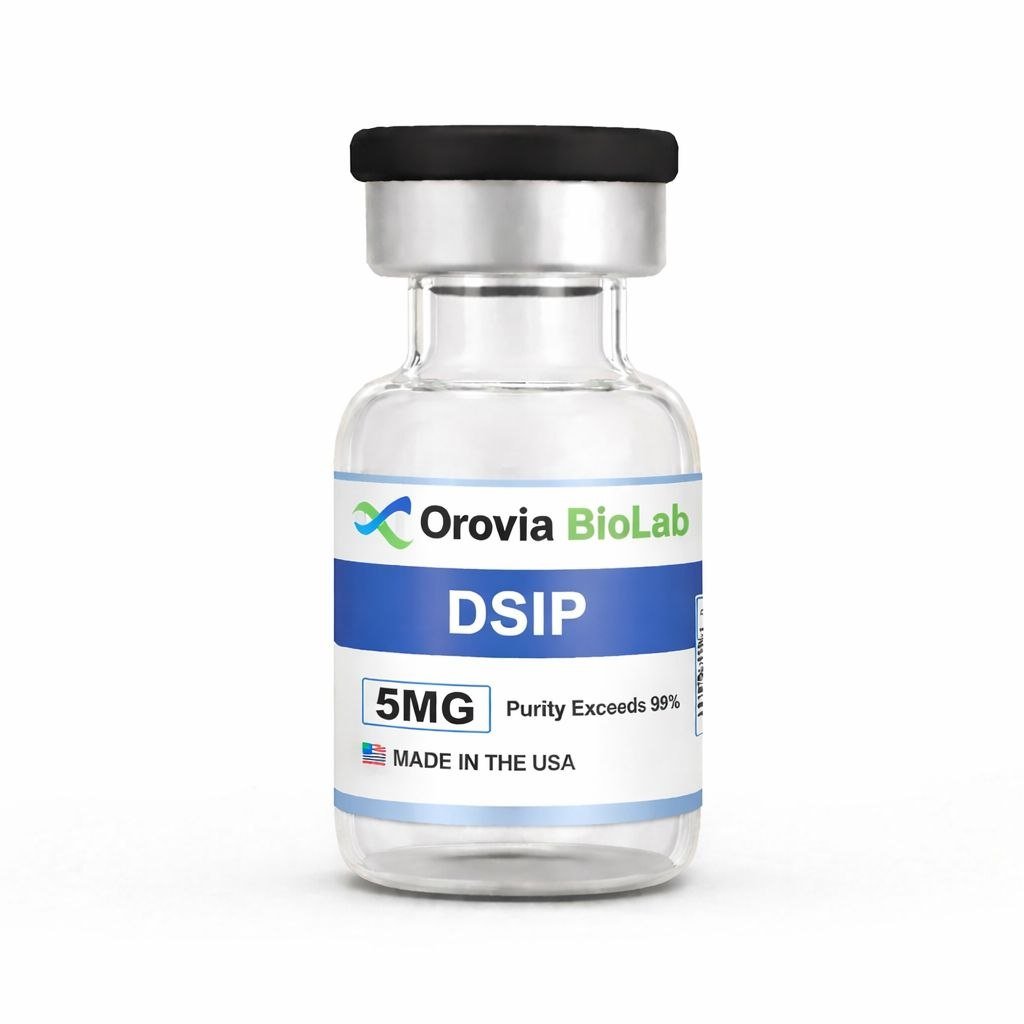
Delta Sleep Inducing Peptide

Price range: $55.00 through $95.00

Description

Delta Sleep Inducing Peptide

Delta Sleep-Inducing Peptide (DSIP) is a naturally occurring nonapeptide (a chain of 9 amino acids) first isolated from rabbit brains in 1977 by Swiss researchers. Its amino acid sequence is Trp-Ala-Gly-Gly-Asp-Ala-Ser-Gly-Glu (WAGGDASGE). DSIP is produced in the hypothalamus and is implicated in regulating sleep, stress responses, and neuroendocrine functions. It’s not a true hormone but acts as a neuromodulator.

Key Properties and Effects

  • Sleep Regulation: DSIP promotes delta wave sleep (deep, slow-wave sleep stages 3-4), which is crucial for physical restoration, immune function, and memory consolidation. Studies show it shortens sleep latency (time to fall asleep) and increases total sleep time without disrupting REM sleep.
  • Stress Reduction: It exhibits anti-stress and adaptogenic effects, reducing corticotropin-releasing hormone (CRH) and normalizing ACTH/cortisol levels under stress.
  • Other Potential Benefits (from animal and limited human studies):
Effect Evidence Summary
Pain Modulation Analgesic in some models; may influence opioid systems.
Antioxidant Protects against free radical damage; potential neuroprotection.
Hormonal Balance Lowers somatostatin (inhibits GH); may normalize LH/FSH in hypogonadism.
Anticonvulsant Reduces seizure activity in epilepsy models.

Scientific Evidence

  • Discovery and Early Studies: Identified by Schoenenberger and Monnier (1977) after extracting from brains of rabbits exposed to prolonged wakefulness. Intracerebroventricular injection induced delta sleep in rabbits.
  • Human Trials: Small-scale studies (e.g., 1980s-1990s) showed IV DSIP (25 nmol/kg) improved sleep in insomniacs, reduced chronic pain, and normalized cortisol in stressed patients. A 1981 study in Experientia reported better sleep efficiency.
  • Mechanisms: Binds to unknown receptors (possibly G-protein coupled); influences GABA, serotonin, and melatonin pathways. Not fully understood—debated if it’s a true sleep peptide or pleiotropic modulator.
  • Limitations: Most evidence is from animal models or small human cohorts. No large RCTs. Meta-analyses (e.g., 2014 review in Peptides) note inconsistent replication due to purity issues and dosing variability.

Uses and Availability

  • Therapeutic: Investigational for insomnia, fibromyalgia, depression, and withdrawal syndromes (e.g., alcohol). Not FDA-approved; available as research chemical or in some nootropic stacks.
  • Dosing (Anecdotal/Research): 100-300 mcg subcutaneous/IV before bed; half-life ~15 minutes.
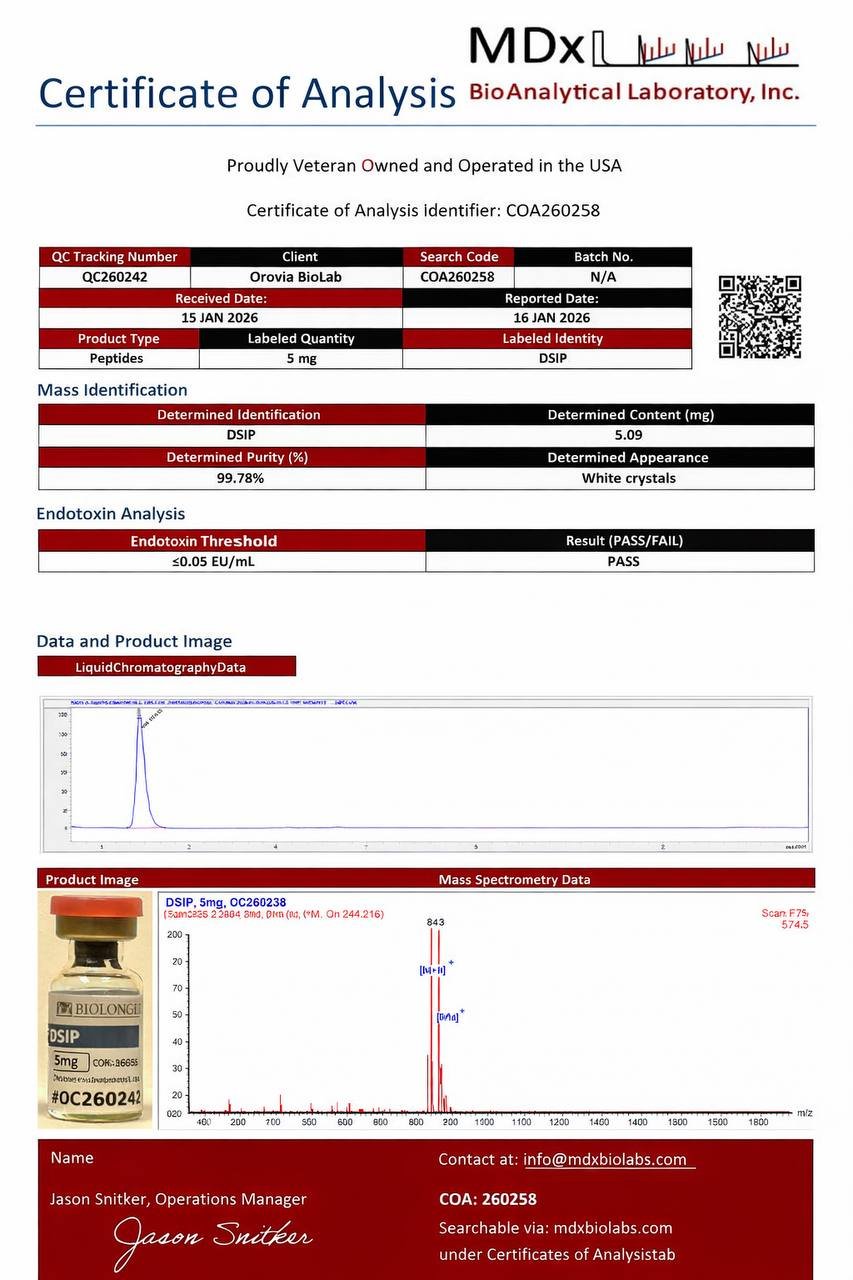
  • Sources: Synthesized peptides sold online (e.g., for research), but quality varies—third-party testing recommended.

Safety and Side Effects

  • Generally well-tolerated in studies; rare reports of headaches, injection-site reactions, or transient mood changes.
  • No Major Risks: Non-addictive, no tolerance buildup observed. Contraindicated in pregnancy (insufficient data).
  • Legality: Legal in most countries as a research peptide; not scheduled.

Current Status and Ongoing Research

DSIP remains obscure due to reproducibility issues and lack of pharma interest (hard to patent natural peptide). Recent studies (e.g., 2020s) explore synthetic analogs for PTSD and neurodegeneration. PubMed has ~200 papers; key reviews: Schneider-Helmert (1981) and Frontiers in Endocrinology (2019).

For deeper dives, check PubMed or Examine.com. If you’re researching for personal use, consult a physician—self-experimentation carries risks. Sources: Primary literature via PubMed, Peptides journal reviews.

Additional information
Quantity5mg, 10mg
Delivery Details

2-3 days from the time of purchase to all locations

Order now and enjoy great discounts! We deliver top-quality peptide products straight to you. Fast, reliable, and discreet service. Delivery hours: 10 AM–8 PM daily. Don’t miss out

Delta Sleep Inducing Peptide Research

Discovery and Structure

  • Isolation: Identified by Swiss researchers (Schneider-Helmert et al.) in hypothalamic extracts of rabbits under deep sleep (delta wave stage).
  • Sequence: H-Trp-Ala-Gly-Gly-Asp-Ala-Ser-Gly-Glu-OH (9 amino acids, MW ~848 Da).
  • Sources: Endogenous in the hypothalamus, pineal gland, and pituitary; also synthetic analogs studied.

Evidence: Original paper in Experientia (1977); confirmed via mass spectrometry in later studies (e.g., Peptides, 1988).

Proposed Mechanisms of Action

DSIP does not act via a single receptor but influences multiple systems:

  • Sleep Promotion: Enhances slow-wave sleep (SWS, delta waves) without suppressing REM. Reduces sleep latency and increases total sleep time in animal models.
  • Stress Reduction: Normalizes ACTH, cortisol, and somatostatin levels; acts as an antioxidant and free radical scavenger.
  • Neuroendocrine Effects: Modulates GH/IGF-1 axis, inhibits somatostatin, stimulates LH/FSH.
  • Other: Potential GABAergic modulation, mitochondrial stabilization, and anti-cancer properties (in vitro tumor growth inhibition).

Evidence:

Mechanism Key Studies Findings
Sleep Induction Anastasi et al. (1981, Eur J Pharmacol) IV DSIP (25 nmol/kg) increased delta sleep in rabbits by 30-50%.
Stress/Anti-Epileptic Yehuda et al. (1980, Neurosci Lett) Reduced cortisol in stressed rabbits; anticonvulsant in pentylenetetrazol models.
Neuroprotection Bjartmar et al. (2000, Brain Res) Protected against ischemic damage in rat hippocampus.
Antioxidant Kovalzon & Mukhametov (2008 review) Scavenges ROS, stabilizes membranes.

Clinical Research

Human trials are limited (mostly 1970s-1990s, small N=10-50), with mixed but promising results:

  • Insomnia: 7.5 mg nasal spray improved sleep efficiency in chronic insomniacs (Graf & Kastin, 1984, Peptides). Subjective reports: faster sleep onset, fewer awakenings.
  • Depression/Anxiety: Reduced symptoms in major depression (Krüger et al., 1983, Int J Clin Pharmacol Ther Toxicol); normalized EEG in neurotics.
  • Chronic Pain: Adjuvant in neuropathic pain, reducing opioid needs (Berti et al., 1989).
  • Other: Improved alcohol withdrawal (Schneider-Helmert, 1981); potential in withdrawal syndromes.

Limitations:

  • No large RCTs; many open-label or crossover designs.
  • Inconsistent dosing (IV 25-100 nmol/kg; nasal 0.1-1 mg).
  • Short half-life (~15 min), poor oral bioavailability → focus on intranasal/sublingual.

Recent Meta-Analyses: A 2014 review (Front Biosci) notes "insufficient evidence for routine use" but calls for modern trials. 2022 preclinical data (Int J Mol Sci) supports role in circadian rhythm disorders.

Current Status and Availability

  • Regulatory: Not FDA/EMA-approved as a drug. Sold as a research chemical or nootropic (e.g., 1-10 mg vials online).
  • Ongoing Research: Focus on analogs for Alzheimer's (tau pathology reduction, J Alzheimers Dis 2019), PTSD, and longevity (mimics caloric restriction effects).
  • Safety Profile: Low toxicity in animal studies (LD50 >1 g/kg); mild side effects (headache, injection site reactions). No abuse potential noted.

Key References

  1. Schneider-Helmert et al. (1977). Experientia - Discovery.
  2. Frieboes et al. (1995). Eur Arch Psychiatry Clin Neurosci - Human sleep study.
  3. Kovalzon (2016). Neurosci Behav Physiol - Comprehensive review.
  4. PubMed search: "DSIP sleep" yields ~300 papers; latest (2023) on synthetic DSIP in zebrafish models.

For primary sources, search PubMed or Google Scholar with "Delta Sleep-Inducing Peptide." If synthesizing or experimenting, consult lab protocols (e.g., HPLC purification >98% purity recommended). Research remains niche—promising but understudied. Let me know if you need specifics on protocols, analogs, or vendors!

Customer Reviews

0 reviews
0
0
0
0
0

There are no reviews yet.

Be the first to review “Delta Sleep Inducing Peptide”

Your email address will not be published. Required fields are marked *