Follistatin Research
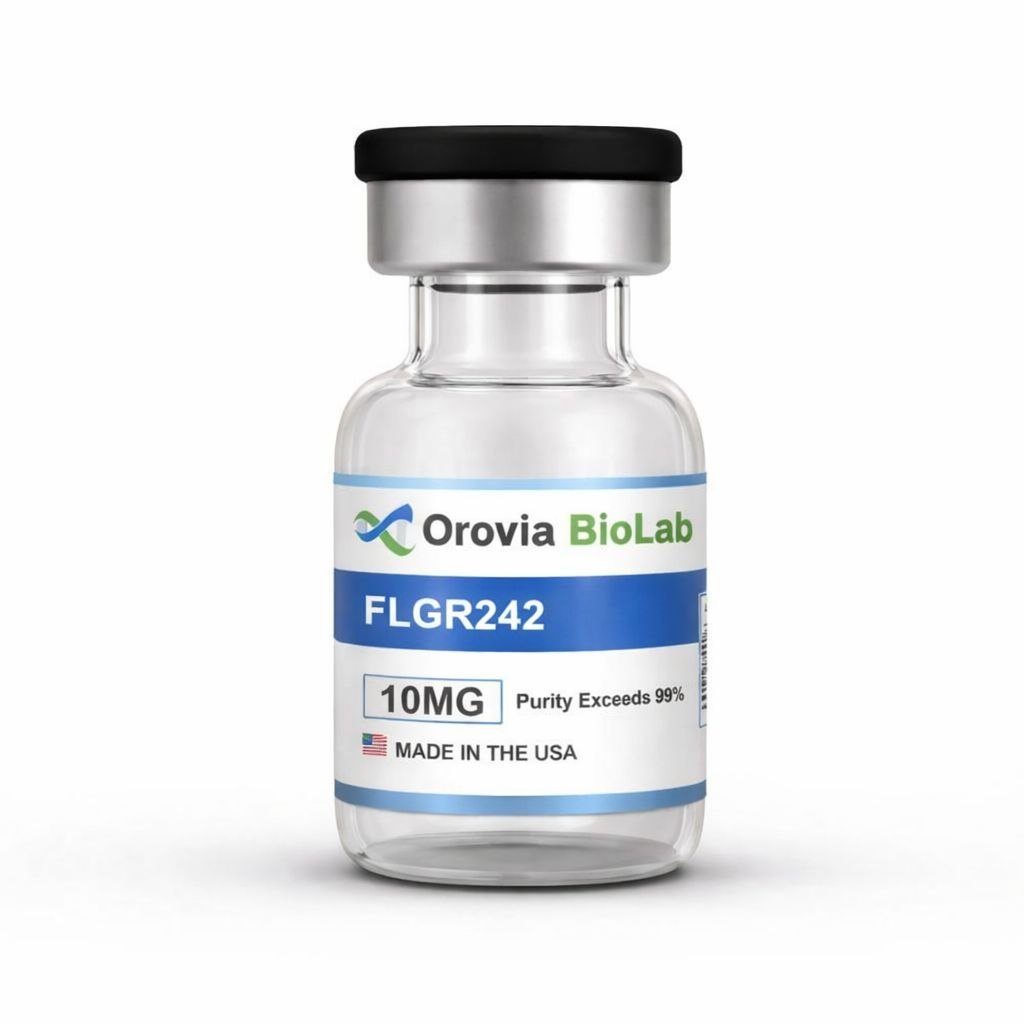
Follistatin is a secreted glycoprotein that binds and neutralizes members of the TGF-β superfamily, with research focusing on its interactions with myostatin and bone morphogenetic proteins across multiple tissue types.
Myostatin and Muscle Mass Regulation
Follistatin acts as a myostatin antagonist, binding and sequestering this growth inhibitor to prevent interaction with cellular receptors. This inhibition blocks SMAD signaling cascades that normally limit muscle fiber development[1].
Laboratory models show follistatin increases muscle mass through enhanced fiber size rather than fiber number[2]. The protein also promotes satellite cell activation during muscle regeneration protocols[3].
Research indicates follistatin expression is regulated by nitric oxide and cyclic GMP pathways during myoblast fusion in cell culture systems[4].
Metabolic and Adipose Tissue Research
Follistatin induces browning of white adipose tissue in laboratory models through upregulation of UCP1 and thermogenic markers[5]. The protein enhances mitochondrial biogenesis and shifts cellular metabolism toward fat oxidation[6].
Studies show follistatin reduces hepatic glucose production while improving peripheral glucose uptake in metabolic research protocols[7]. These effects appear linked to modulation of FoxO1 signaling pathways in hepatic cell lines[8].
Tissue Repair and Regeneration Models
In wound healing studies, follistatin regulates keratinocyte proliferation and migration during repair processes[9]. The protein reduces fibrosis formation while promoting neovascularization in muscle injury models[3].
Cardiovascular and Angiogenic Properties
Follistatin-like proteins promote endothelial cell function and stimulate revascularization through nitric oxide synthase-dependent pathways[10]. The protein enhances endothelial cell proliferation, migration, and tube formation in angiogenesis assays[11].
Research demonstrates follistatin activates Akt signaling pathways in cardiomyocyte survival studies[12].
Bone and Cartilage Development
Follistatin modulates BMP signaling pathways that control osteogenic differentiation in mesenchymal stem cell cultures. The protein enhances cell migration and vascular development in bone tissue engineering models[11].
Laboratory studies show varied effects on bone formation markers depending on cellular context and experimental conditions[11].
Reproductive and Developmental Biology
Follistatin functions downstream of Wnt4 signaling during ovarian development in animal models[13].
Gonadotropin-releasing hormone pulse frequency controls follistatin expression in reproductive tissue studies[14].
Hepatic Function Studies
In liver research, follistatin influences hepatic steatosis through mTOR-dependent pathways[15]. The protein acts as a hepatokine affecting systemic energy metabolism when expressed in hepatic cell lines[16].
Laboratory protocols examine how follistatin regulates glucose production and lipid synthesis in metabolic research models[8].
Neuroprotective Mechanisms
Follistatin-like proteins attenuate neuronal apoptosis through Akt pathway activation in ischemic injury models. The protein affects neurogenesis and synaptic development through TGF-β superfamily signaling modulation in neural cell cultures[17].
References
- S.-J. Lee et al., “Regulation of Muscle Mass by Follistatin and Activins,” The Endocrine Society, Oct. 2010. doi: 10.1210/me.2010-0127. https://doi.org/10.1210/me.2010-0127
- S. S. Gangopadhyay, “Systemic administration of Follistatin288 increases muscle mass and reduces fat accumulation in mice,” Springer Science and Business Media LLC, Aug. 2013. doi: 10.1038/srep02441. https://doi.org/10.1038/srep02441
- J. Zhu et al., “Follistatin Improves Skeletal Muscle Healing after Injury and Disease through an Interaction with Muscle Regeneration, Angiogenesis, and Fibrosis,” Elsevier BV, Aug. 2011. doi: 10.1016/j.ajpath.2011.04.008. https://doi.org/10.1016/j.ajpath.2011.04.008
- A. Pisconti et al., “Follistatin induction by nitric oxide through cyclic GMP: a tightly regulated signaling pathway that controls myoblast fusion,” Rockefeller University Press, Jan. 2013. doi: 10.1083/jcb.2005070832003r. https://doi.org/10.1083/jcb.2005070832003r
- M. Braga et al., “Follistatin promotes adipocyte differentiation, browning, and energy metabolism,” Elsevier BV, Mar. 2014. doi: 10.1194/jlr.m039719. https://doi.org/10.1194/jlr.m039719
- S. Pervin, S. T. Reddy, and R. Singh, “Novel Roles of Follistatin/Myostatin in Transforming Growth Factor-β Signaling and Adipose Browning: Potential for Therapeutic Intervention in Obesity Related Metabolic Disorders,” Frontiers Media SA, Apr. 2021. doi: 10.3389/fendo.2021.653179. https://doi.org/10.3389/fendo.2021.653179
- X. Han et al., “Mechanisms involved in follistatin‐induced hypertrophy and increased insulin action in skeletal muscle,” Wiley, Aug. 2019. doi: 10.1002/jcsm.12474. https://doi.org/10.1002/jcsm.12474
- R. Tao, O. Stöhr, C. Wang, W. Qiu, K. D. Copps, and M. F. White, “Hepatic follistatin increases basal metabolic rate and attenuates diet-induced obesity during hepatic insulin resistance,” Elsevier BV, May 2023. doi: 10.1016/j.molmet.2023.101703. https://doi.org/10.1016/j.molmet.2023.101703
- M. Antsiferova et al., “Keratinocyte-derived follistatin regulates epidermal homeostasis and wound repair,” Elsevier BV, Feb. 2009. doi: 10.1038/labinvest.2008.120. https://doi.org/10.1038/labinvest.2008.120
- N. Ouchi et al., “Follistatin-like 1, a Secreted Muscle Protein, Promotes Endothelial Cell Function and Revascularization in Ischemic Tissue through a Nitric-oxide Synthase-dependent Mechanism,” Elsevier BV, Nov. 2008. doi: 10.1074/jbc.m803440200. https://doi.org/10.1074/jbc.m803440200
- S. Fahmy-Garcia et al., “Follistatin Effects in Migration, Vascularization, and Osteogenesis in vitro and Bone Repair in vivo,” Frontiers Media SA, Mar. 2019. doi: 10.3389/fbioe.2019.00038. https://doi.org/10.3389/fbioe.2019.00038
- Y. Oshima, N. Ouchi, K. Sato, Y. Izumiya, D. R. Pimentel, and K. Walsh, “Follistatin-Like 1 Is an Akt-Regulated Cardioprotective Factor That Is Secreted by the Heart,” Ovid Technologies (Wolters Kluwer Health), Jun. 2008. doi: 10.1161/circulationaha.108.767673. https://doi.org/10.1161/circulationaha.108.767673
- H. H. C. Yao et al., “Follistatin operates downstream of Wnt4 in mammalian ovary organogenesis,” Wiley, Apr. 2004. doi: 10.1002/dvdy.20042. https://doi.org/10.1002/dvdy.20042
- S. E. Kirk, A. C. Dalkin, M. Yasin, D. J. Haisenleder, and J. C. Marshall, “Gonadotropin-releasing hormone pulse frequency regulates expression of pituitary follistatin messenger ribonucleic acid: a mechanism for differential gonadotrope function.,” The Endocrine Society, Sep. 1994. doi: 10.1210/endo.135.3.8070381. https://doi.org/10.1210/endo.135.3.8070381
- J. Tong et al., “Follistatin Alleviates Hepatic Steatosis in NAFLD via the mTOR Dependent Pathway,” Informa UK Limited, Oct. 2022. doi: 10.2147/dmso.s380053. https://doi.org/10.2147/dmso.s380053
- C. Schumann et al., “Increasing lean muscle mass in mice via nanoparticle-mediated hepatic delivery of follistatin mRNA,” Ivyspring International Publisher, 2018. doi: 10.7150/thno.27847. https://doi.org/10.7150/thno.27847
- X. Liang et al., “Follistatin-Like 1 Attenuates Apoptosis via Disco-Interacting Protein 2 Homolog A/Akt Pathway After Middle Cerebral Artery Occlusion in Rats,” Ovid Technologies (Wolters Kluwer Health), Oct. 2014. doi: 10.1161/strokeaha.114.006092. https://doi.org/10.1161/strokeaha.114.006092
 Express & Discreet Shippin









Reviews
Clear filtersThere are no reviews yet.