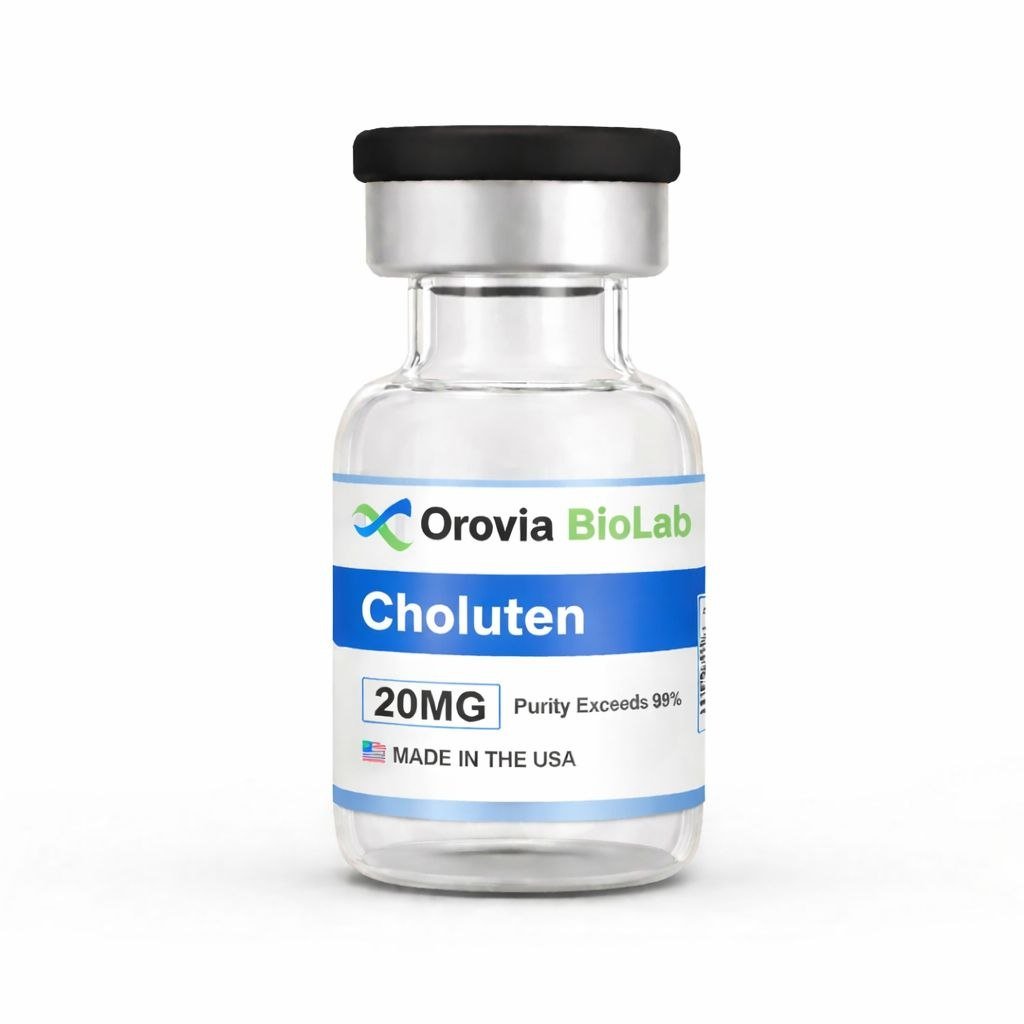
Chonluten is a synthetic tetrapeptide (Glu-Asp-Leu, or EDL) developed in Russia as part of the Khavinson peptide bioregulator family. It’s primarily researched for its potential role in supporting pineal gland function and regulating melatonin production. The pineal gland, located in the brain, influences circadian rhythms, sleep-wake cycles, aging processes, and neuroendocrine regulation. Chonluten is marketed as a geroprotector (anti-aging agent) and is often used in peptide therapy protocols.
Key Claims and Research Background
- Origin: Developed by Russian scientists like Vladimir Khavinson at the St. Petersburg Institute of Bioregulation and Gerontology. It’s extracted or synthesized to mimic natural pineal peptides.
- Mechanism: Believed to normalize pineal gland activity by:
- Activating melatonin synthesis.
- Influencing gene expression related to aging, apoptosis (cell death), and immune function.
- Supporting epiphyseal (pineal) tissue repair.
- Studies (mostly Russian, limited Western validation):
| Study Focus |
Key Findings |
Source Example |
| Aging & Longevity |
Increased lifespan in rodents; improved pineal function in elderly humans. |
Khavinson et al., Bulletin of Experimental Biology and Medicine (2002). |
| Sleep & Melatonin |
Restored melatonin levels in patients with insomnia or pineal disorders. |
Advances in Gerontology (2010). |
| Neuroprotection |
Potential benefits in Alzheimer’s models via anti-oxidative effects. |
Preclinical animal studies (e.g., 2015). |
| Oncology Support |
Adjuvant use in cancer patients to mitigate treatment side effects. |
Clinical trials in Russia (e.g., 2000s). |
Evidence is largely from small-scale, non-randomized trials or animal models. No large-scale FDA-approved RCTs exist. A 2020 review in Biogerontology notes promising epigenetic effects but calls for more rigorous studies.
Common Uses (Off-Label/Anecdotal)
- Anti-aging: 1-2 courses/year to “rejuvenate” pineal gland.
- Sleep disorders: Improve melatonin rhythms.
- Immune modulation: Often stacked with peptides like Thymalin or Epitalon.
- Dosage (typical, not medical advice): 1-2 mg/day sublingually or injected for 10-20 days, 2-3x/year.
Availability & Forms
- Sold as capsules, nasal sprays, or injectables via peptide suppliers (e.g., CosmicNootropic, Peptide Sciences).
- Not FDA-approved; classified as a research chemical in the US/EU. Legal for personal research but not as a drug.
Potential Side Effects & Safety
- Reported: Rare; mild headaches, injection-site irritation.
- Risks: Unknown long-term effects; possible hormone interactions (e.g., with thyroid or reproductive systems). Contraindicated in pregnancy, acute psychosis.
- Quality Concerns: Counterfeits common—third-party testing (e.g., HPLC purity >98%) recommended.
Evidence Summary
| Pros |
Cons |
| Strong preclinical data on melatonin/pineal regulation. |
Limited human trials; mostly Russian publications. |
| Anecdotal reports of better sleep/energy. |
No robust Western validation; regulatory gray area. |
| Low reported toxicity. |
Potential for overhyped marketing. |
Disclaimer: This is for informational purposes only. Chonluten is not a substitute for medical treatment. Consult a healthcare professional before use, especially if you have health conditions. Research peptides carry risks of impurity or mislabeling.
For deeper dives, check PubMed for “Chonluten” or Khavinson’s work. Sources: PubMed, ResearchGate, vendor lab reports.
 Express & Discreet Shippin
 Express & Discreet Shippin




Reviews
Clear filtersThere are no reviews yet.