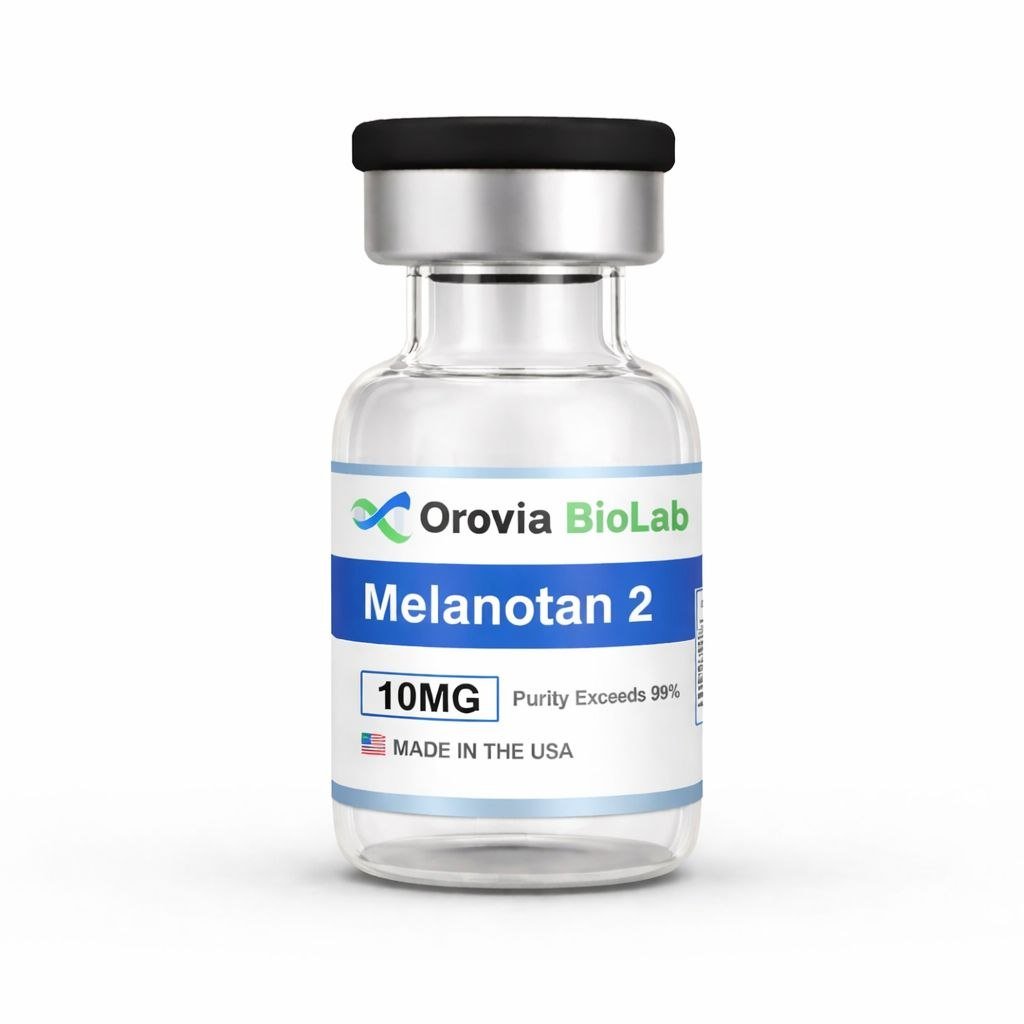
Melanotan II (MT-II) is a synthetic cyclic peptide analog of α-melanocyte-stimulating hormone (α-MSH), a hormone naturally produced in the pituitary gland. Developed in the 1980s at the University of Arizona, it was initially researched for treating skin conditions like vitiligo and erythropoietic protoporphyria. It’s not FDA-approved for any use and is primarily sold online as a research chemical or “grey market” tanning peptide.
Primary Effects and Uses
- Tanning: Binds to melanocortin receptors (MC1R) in the skin, stimulating melanin production. Users report darker skin with minimal UV exposure (e.g., 5-10 minutes of sun or tanning bed).
- Libido and Sexual Function: Acts on MC4R in the brain, causing spontaneous erections in men and increased arousal in women. Often used off-label as an aphrodisiac.
- Appetite Suppression: Some MC3R/MC4R activation may reduce hunger, though less potently than dedicated peptides like semaglutide.
- Other Potential: Anecdotal reports include improved mood, reduced inflammation, and fat loss, but evidence is limited.
Dosage (Anecdotal/User-Reported):
| Phase |
Dosage |
Frequency |
Notes |
| Loading |
0.25-0.5 mg |
Daily for 7-14 days |
Subcutaneous injection; start low to assess tolerance. |
| Maintenance |
0.5-1 mg |
1-2x/week |
Adjust based on skin tone/tanning goals. |
| Libido Boost |
0.5-1 mg |
As needed |
Effects within 1-4 hours. |
Reconstitute lyophilized powder with bacteriostatic water (e.g., 2 mg vial in 2 mL water = 1 mg/mL). Store refrigerated.
Mechanism of Action
MT-II mimics α-MSH:
α-MSH → MC1R (skin melanin ↑) → Tanning

     → MC3R/MC4R (hypothalamus) → Appetite ↓, libido ↑

     → MC5R (exocrine glands) → Possible sebaceous effects
Half-life: ~1 hour, but effects last days due to receptor upregulation.
Evidence and Studies
- Tanning: Phase I/II trials (e.g., Lancet 1996) showed rapid pigmentation in light-skinned subjects with 0.01-0.025 mg/kg doses.
- Erectile Dysfunction: Small studies (e.g., J Urol 2000) reported 85% efficacy in psychogenic ED, better than placebo.
- Safety Data: Limited human trials; animal studies show low acute toxicity (LD50 >100 mg/kg in rats).
- No large RCTs; most data from user forums (e.g., Reddit r/Melanotan2) and case reports.
Pros (from studies/anecdotes):
- Effective at low doses.
- Persistent effects post-discontinuation.
Cons/Risks:
| Risk |
Details |
Evidence |
| Nausea/Flushing |
Common (dose-dependent), lasts 1-2 hours. |
50% in trials.
|
| Moles/Freckles |
Darkening of existing lesions; monitor skin cancer risk. |
Case reports of melanoma promotion. |
| Priapism |
Prolonged erections (rare). |
Anecdotal. |
| Renal Effects |
Possible kidney strain with overuse. |
Animal data. |
| Unknown Long-Term |
No data >1 year; potential hormonal disruption. |
Theoretical. |
Contraindications: Pregnancy, kidney/liver disease, skin cancer history. Avoid with photosensitizers.
Legality and Sourcing
- US/EU: Unscheduled but illegal to market for human use (research only). Banned in Australia for import.
- Sourcing: Online vendors (e.g., Peptide Sciences, domestic suppliers). Purity varies (test via HPLC/MS if possible; aim for >98%). Cost: $30-50/10 mg vial.
- Purity Check: Reputable sites provide COAs; avoid cheap imports.
Alternatives
| Peptide/Compound |
Key Difference |
Status |
| Melanotan I (Afamelanotide) |
Less libido effects, FDA-approved for rare disorders. |
Prescription only. |
| PT-141 (Bremelanotide) |
Libido-focused derivative. |
FDA-approved for women (Vyleesi). |
| Oral MT-II |
Lower bioavailability (~30%). |
Experimental. |
Harm Reduction: Start with 0.1-0.25 mg, use insulin pins, rotate sites, stay hydrated, use sunscreen despite tanning. Bloodwork recommended (liver/kidney panels). Not medical advice—consult a doctor. For research, see PubMed (e.g., PMID 9443423).
 Express & Discreet Shippin
 Express & Discreet Shippin




Reviews
Clear filtersThere are no reviews yet.