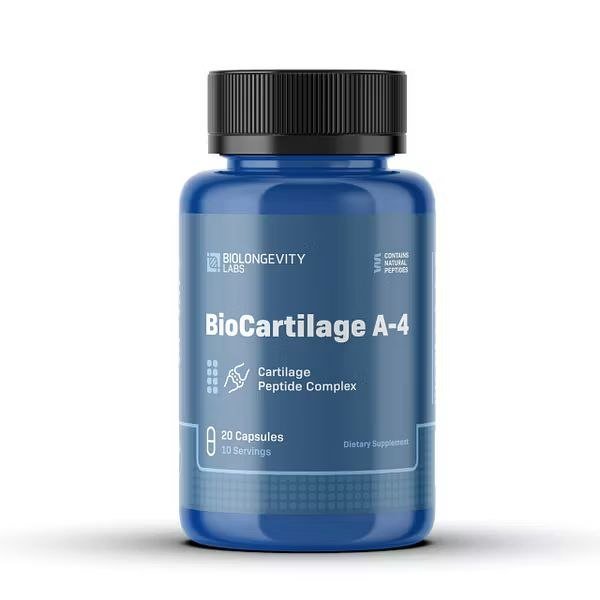
Sigumir is a natural peptide bioregulator (also known as Peptide Complex A-4 or BioCartilage) designed to support cartilage, joint, and bone health. It contains a complex of low-molecular-weight peptides extracted from the cartilage and bone tissue of young animals (typically calves under 12 months). Developed as part of the Khavinson Cytomax range at the St. Petersburg Institute of Bioregulation and Gerontology, it aims to normalize metabolic processes in cartilage cells (chondrocytes) and help regulate joint and spinal function.
Unlike general joint supplements that supply raw materials such as collagen or glucosamine, Sigumir focuses on tissue-specific cellular regulation. It is commonly used as a dietary supplement to support mobility, reduce discomfort associated with wear-and-tear, and promote long-term musculoskeletal resilience.
What Is Sigumir?
Sigumir belongs to the class of organ-specific peptide bioregulators. These short-chain peptides are isolated from specific tissues and are believed to exert preferential effects on the corresponding human tissues by supporting protein synthesis, cellular metabolism, and functional activity.
Key Potential Benefits of Sigumir
Product literature and clinical observations associated with Sigumir highlight several supportive effects:
- Cartilage metabolism support — Improves trophism (nutrition and metabolic activity) of cartilage cells and helps regulate processes involved in maintaining cartilage integrity.
- Joint comfort and mobility — In patients with knee osteoarthritis, administration was associated with decreased pain and increased joint mobility in approximately 68.5% of cases, particularly in earlier radiographic stages (joint-space narrowing and early osteophytes).
- Support for degenerative conditions — Used as an adjunct for osteoarthritis, spinal osteochondrosis, osteoporosis, and related degenerative-dystrophic changes of joints and the vertebral column.
- Bone mineral density considerations — Preclinical data (including ovariectomy models in rats) suggest cartilage-derived preparations may help preserve or support bone mineral density.
- Regenerative and protective effects — May slow involutional (age-related) changes in cartilaginous tissue and support regenerative processes in bone and cartilage.
- Complementary use — Often combined with other bioregulators (e.g., Ventfort for vessels or muscle-related complexes) for broader skeletal support, whether related to aging or athletic stress.
These effects are attributed to the peptides’ tissue-specific regulatory action rather than direct anti-inflammatory or analgesic mechanisms.
Who May Consider Sigumir?
Sigumir is typically considered by adults seeking support for:
- Age-related joint stiffness or reduced mobility
- Osteoarthritis or early degenerative joint changes
- Spinal osteochondrosis or related back discomfort
- Osteoporosis risk or bone health maintenance
- Recovery or support after intensive physical activity or joint stress
- Preventive musculoskeletal wellness as part of a longevity-oriented protocol
It is not a cure or replacement for medical treatment of arthritis, fractures, or advanced joint disease. Consult a qualified healthcare professional before use, especially if you have existing joint pathology, take medications, or have contraindications.
Suggested Use and Dosing Protocols
Typical protocols drawn from manufacturer and clinical guidance (individual needs vary; follow product labeling or professional advice):
Standard intensive course
- 1–2 capsules, 1–2 times daily (often 2 capsules 2–3 times daily in some clinical protocols) for 30–45 days
Maintenance
- 1–2 capsules daily for 10 days, repeated every 3–6 months
One common osteoarthritis protocol noted: 2 capsules three times daily for 45 days, taken 10–15 minutes before meals.
Courses are generally cycled rather than used continuously. Store in a cool, dry place. Contraindications typically include individual intolerance to components, pregnancy, and lactation.
How Sigumir Works
Short peptide bioregulators are proposed to act by normalizing peptide balance within target tissues. In cartilage, this may:
- Support chondrocyte (cartilage cell) metabolism and protein synthesis
- Improve cellular trophism and adaptive capacity
- Help maintain extracellular matrix components
- Influence processes linked to tissue integrity and slower age-related decline
Experimental work indicates tissue-specific effects on the cells from which the peptides were isolated. Human data primarily come from clinical observations at the developing institute rather than large independent Western trials.
Safety Profile
Sigumir is generally reported as well tolerated when used orally as directed. Clinical summaries note no significant side effects in studied groups and describe it as suitable as a biologically active food additive for adjunctive and preventive use.
 Express & Discreet Shippin
 Express & Discreet Shippin




Reviews
Clear filtersThere are no reviews yet.