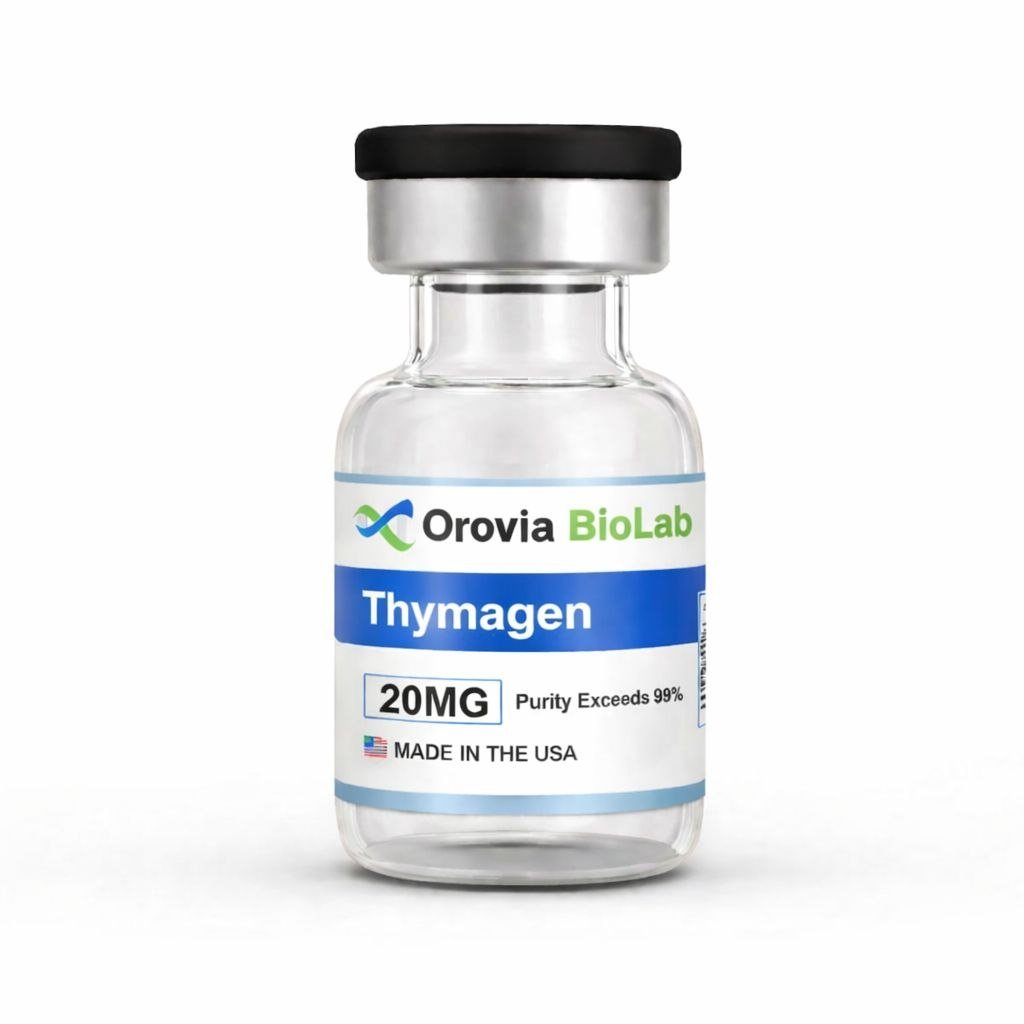
Thymagen (also known as Thymogen or Тhymagen) is a synthetic dipeptide composed of L-Glutamic acid and L-Tryptophan (Glu-Trp). It was developed in Russia in the 1970s by scientists at the Institute of Molecular Biology (led by Vladimir Khavinson) as part of research into bioregulatory peptides. It’s designed to mimic natural thymic peptides extracted from the thymus gland, a key organ in the immune system.
Primary Uses and Mechanism
- Immune Modulation: Thymagen acts as an immunostimulant, particularly targeting T-cell maturation and differentiation in the thymus. It enhances T-helper cell activity, boosts natural killer (NK) cell function, and improves overall cellular immunity without overstimulating (avoids excessive inflammation).
- Clinical Applications (primarily in Russia and Eastern Europe):
- Treatment of immunodeficiencies (e.g., post-chemotherapy, HIV, chronic infections).
- Adjunct therapy for viral infections (hepatitis, herpes).
- Age-related immune decline (geroprotective effects).
- Wound healing and recovery from radiation or surgery.
- Research Evidence:
| Study/Source |
Key Findings |
Year |
| Khavinson et al. (Russian Academy of Sciences) |
Increased T-cell counts by 20-50% in elderly patients; improved survival in sepsis models. |
1990s-2000s |
| Clinical trials in Russia (e.g., for acute respiratory infections) |
Reduced symptom duration by 30-40%; safe in doses up to 10 mg/day. |
2010s |
| Animal studies (mice/rats) |
Prolonged lifespan by 12-20%; normalized thymic hormone levels. |
1980s-2020s |
| Western reviews (e.g., PubMed) |
Limited human trials outside Russia; promising preclinical data for autoimmunity and cancer adjunct. |
Ongoing |
Evidence is strongest from Russian studies (hundreds of publications), but Western validation is sparse due to regulatory hurdles. It’s classified as a peptide bioregulator, not a traditional drug.
Dosage and Administration
- Typical Protocol (from research/clinical use):
| Form |
Dosage |
Duration |
Frequency |
| Injectable (subcutaneous/IM) |
1-5 mg/day |
5-10 days |
1-2x daily |
| Nasal drops/spray |
1-2 mg/day |
10-20 days |
2-3x daily |
| Oral capsules (less common) |
5-10 mg/day |
10-30 days |
1-2x daily |
- Cycles: Often 2-3 courses per year, with breaks. Always consult a physician; not FDA-approved in the US (available as research chemical or via compounding pharmacies in some regions).
Benefits and Potential Side Effects
Reported Benefits:
- Enhances vaccine efficacy.
- Supports recovery from stress/exercise.
- Anti-aging: May regulate gene expression (epigenetic effects per Khavinson’s work).
- Synergistic with Epithalamin (pineal peptide) for longevity protocols.
Side Effects: Rare and mild (e.g., local injection site reactions). Contraindications: Acute psychosis, pregnancy, hypersensitivity. No major toxicity in studies up to 100 mg/kg in animals.
Availability and Legality
- Russia/Ukraine: Registered medicine (e.g., as “Thymogen” solution).
- US/EU: Research peptide only (not for human consumption per FDA). Sold online (e.g., 10-20 mg vials ~$50-100) from vendors like Peptide Sciences or CosmicNootropic. Purity varies—third-party testing recommended (HPLC >98%).
- Stacking: Commonly paired with other Khavinson peptides (e.g., Epitalon, Cortexin) for immune/anti-aging stacks.
For deeper dives, check PubMed (search “Thymogen” or “Glu-Trp peptide”) or Khavinson’s book Peptides and Ageing. If using, source from reputable labs and monitor via bloodwork (e.g., T-cell subsets). Not medical advice—consult a specialist.
 Express & Discreet Shippin
 Express & Discreet Shippin




Reviews
Clear filtersThere are no reviews yet.