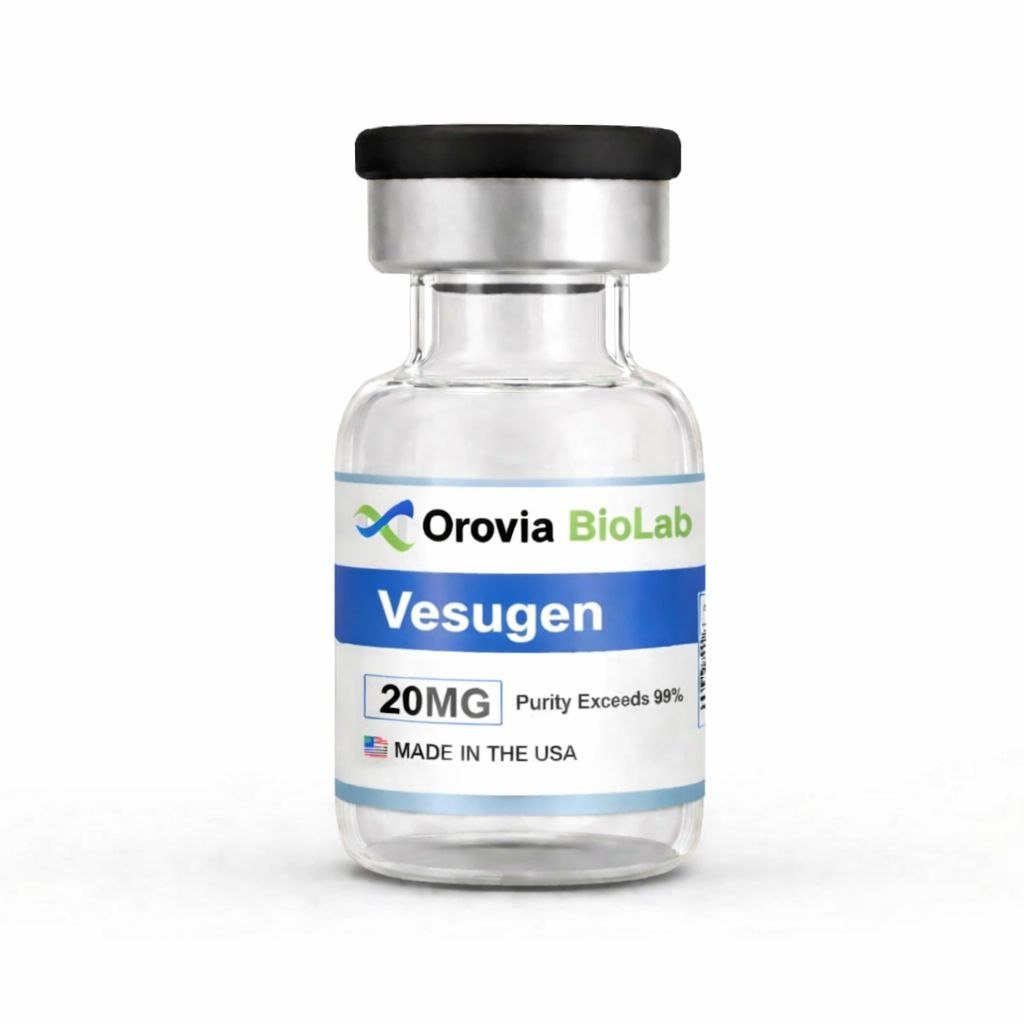
Vesugen (also spelled Vesugen or Везуген in Russian) is a synthetic tetrapeptide bioregulator with the sequence Lys-Glu-Asp-Ala (KEDA). Developed by Russian scientists at the St. Petersburg Institute of Bioregulation and Gerontology (led by Vladimir Khavinson), it’s part of a class of short-chain peptides designed to mimic and regulate natural vascular tissue factors. Vesugen Peptide is a primarily researched for its potential role in vascular health, endothelial function, and anti-aging effects.
Claimed Benefits and Mechanism
Vesugen is marketed as a vascular-targeted peptide that:
- Supports endothelial cells: Promotes repair and regeneration of blood vessel linings, potentially improving microcirculation.
- Antioxidant and anti-inflammatory effects: May reduce oxidative stress and inflammation in vessels.
- Anti-aging properties: Used in gerontology to normalize gene expression related to vascular aging, fibrosis, and atherosclerosis.
Key research areas (based on Russian studies, often in PubMed or CyberLeninka):
- Cardiovascular health: Improves retinal microcirculation in glaucoma/AMD (e.g., Khavinson et al., 2014).
- Neuroprotection: Potential benefits in stroke recovery and cognitive decline via better cerebral blood flow.
- Longevity: Part of Khavinson’s peptide protocols for extending healthy lifespan by targeting vascular senescence.
| Study Example |
Findings |
Source |
| Vesugen in retinal diseases (2014) |
Improved visual acuity and microcirculation in 70% of patients after 10-day course. |
Advances in Gerontology |
| Vascular peptide effects on endothelial function (2009) |
Normalized gene expression in HUVEC cells; reduced apoptosis. |
Bulletin of Experimental Biology |
| Combo with Ventfort (vascular peptides) |
Enhanced anti-atherosclerotic effects in animal models. |
Khavinson reviews |
Dosage (typical, from protocols): 1-2 mg/day subcutaneously or intramuscularly for 10-20 days, 2-3 cycles/year. Oral/sublingual forms exist but are less studied.
Scientific Evidence
- Strengths: Backed by 20+ Russian clinical trials (e.g., on 1000+ patients for vascular issues). Peptides like Vesugen show epigenetic modulation—they influence DNA expression without altering the sequence (verified in cell cultures).
- Limitations: Most data from Russia; limited Western RCTs. FDA/EMA not approved—sold as a research chemical or supplement (e.g., via CosmicNootropic, Peptide Sciences). No large Phase III trials.
- Safety: Low toxicity in studies (LD50 >5000 mg/kg in rats). Mild side effects: injection site irritation. Contraindications: pregnancy, acute psychosis.
Availability and Legality
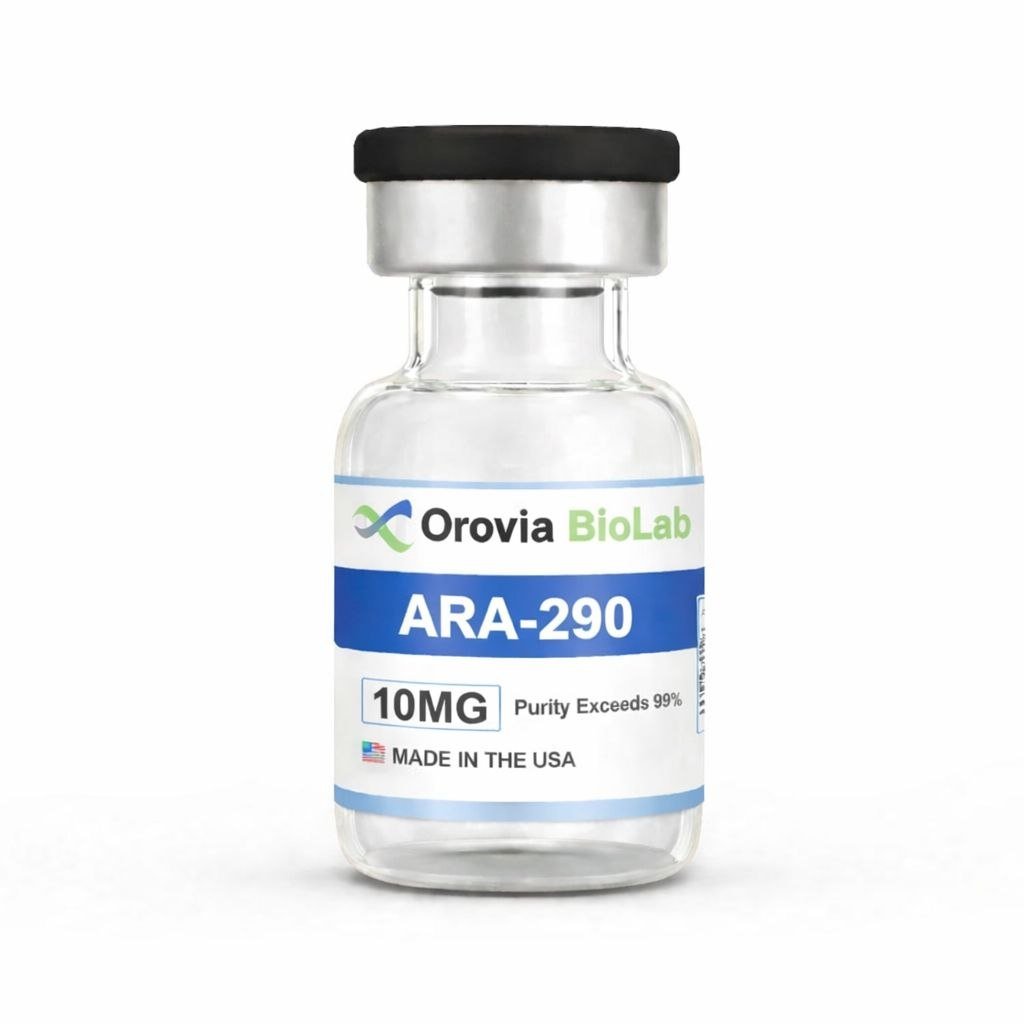
- Buy online: Research peptide vendors (e.g., 10mg vials ~$50-100 USD). Not for human consumption legally in most countries—labeled “for lab use.”
- Alternatives: Natural options like pine bark extract or gotu kola for vascular support; other Khavinson peptides (e.g., Ventfort for vessels).
Caveat: Consult a doctor before use. While promising, evidence is preliminary—treat as experimental. For deeper dives, check PubMed for “Vesugen” or Khavinson’s book Peptides and Ageing.
 Express & Discreet Shippin
 Express & Discreet Shippin




Reviews
Clear filtersThere are no reviews yet.